
Plastic in Everyday Life: Health Concerns and Safer Ways to Use It
Plastic in Everyday Life: Health Concerns and Safer Ways to Use It
Plastic is convenient, but damaged containers, excessive heat, disposable products, and growing microplastic pollution are raising environmental and health concerns. Simple household precautions can reduce unnecessary exposure.
Plastic is found throughout modern life from food containers and water bottles to toys, packaging, clothing, and household products. Its convenience and low cost have made it difficult to avoid, but growing plastic waste and emerging health concerns are prompting many families to reconsider how they use it.
A Growing Environmental Problem
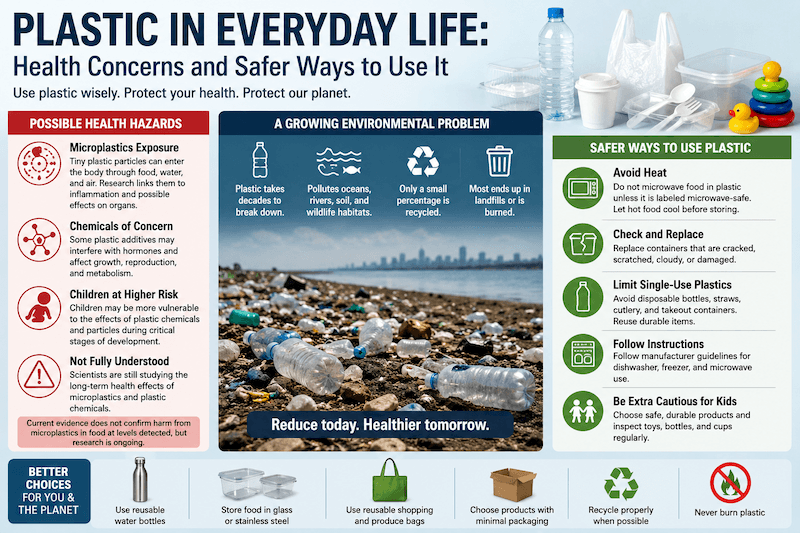
Many plastic products are used only once but remain in the environment for decades. Larger items gradually break into microplastics—tiny particles now found in water, food, soil, air, and marine ecosystems. The U.S. Environmental Protection Agency describes microplastics as pervasive in both natural and built environments and continues to study their potential effects on people and wildlife.
Plastic waste can also clog waterways, harm animals, contaminate communities, and add pressure to landfills. Recycling helps, but many plastics are difficult or uneconomical to recycle because they contain mixed materials, additives, dyes, or food contamination.
Possible Health Hazards
Scientists are studying how plastic particles and chemicals associated with plastic may affect human health.
Microplastics can enter the body through food, drinking water, and inhaled air. Research has raised concerns about possible effects involving inflammation, the digestive system, lungs, reproductive health, and hormone function. However, important uncertainties remain, and the strength of evidence varies by exposure type and health outcome. Some chemicals used in plastics may interfere with the body’s endocrine system, which regulates hormones involved in growth, metabolism, reproduction, and development. The National Institute of Environmental Health Sciences notes that endocrine-disrupting chemicals may mimic, block, or interfere with natural hormones. At the same time, the FDA says current evidence does not demonstrate that the levels of microplastics and nanoplastics detected in food pose a confirmed risk to human health. Research is continuing, and regulators are reviewing new scientific findings as they emerge.
Safer Use at Home
Families do not need to eliminate every plastic item, but a few precautions can reduce unnecessary exposure.
Use plastic containers only for their intended purpose. Do not microwave food in plastic unless the container is clearly labeled microwave-safe. The FDA advises against heating food or drinks in plastic tableware that is not specifically approved for microwave use.
Replace containers that are cracked, cloudy, deeply scratched, warped, or damaged. Wear and heat can weaken plastic and make it more likely to shed particles.
Allow hot food to cool before placing it in plastic, or use glass, stainless steel, or ceramic containers for hot meals and beverages.
Avoid repeatedly reusing disposable water bottles and takeout containers. These products are generally designed for short-term use rather than long-term storage or repeated heating.
Follow manufacturer instructions for dishwashers, freezers, and microwaves. A container that is safe for cold storage may not be suitable for high temperatures.
For infants and young children, choose durable products from reputable manufacturers and inspect bottles, cups, and toys regularly for damage.
Reducing Plastic Without Giving Up Convenience
Simple changes can reduce both waste and routine exposure:
Carry a reusable glass or stainless-steel water bottle.
Store leftovers in glass or food-grade stainless steel.
Use reusable shopping and produce bags.
Avoid unnecessary single-use cutlery, straws, and packaging.
Choose products with minimal packaging when practical.
Never burn plastic, because heating and combustion can release hazardous fumes.
A Balanced Approach
Plastic remains useful in medicine, food safety, transportation, and many household applications. The goal is not to create fear, but to use plastic thoughtfully—especially around heat, food, children, and damaged containers.
Reducing unnecessary plastic use, following safety labels, and choosing durable alternatives can help families lower waste while scientists continue investigating the long-term health effects of plastic particles and associated chemicals.
Suggested excerpt:
Plastic is convenient, but damaged containers, excessive heat, disposable products, and growing microplastic pollution are raising environmental and health concerns. Simple household precautions can reduce unnecessary exposure.
Topics
Source: Arizona Asians independently prepared this article using information from the FDA, EPA, CDC-affiliated research, and the National Institute of Environmental Health Sciences. This article is for general educational purposes and is not medical advice.