
U.S.-Canada Trade Dispute Escalates as New Tariffs and Import Bans Take Shape
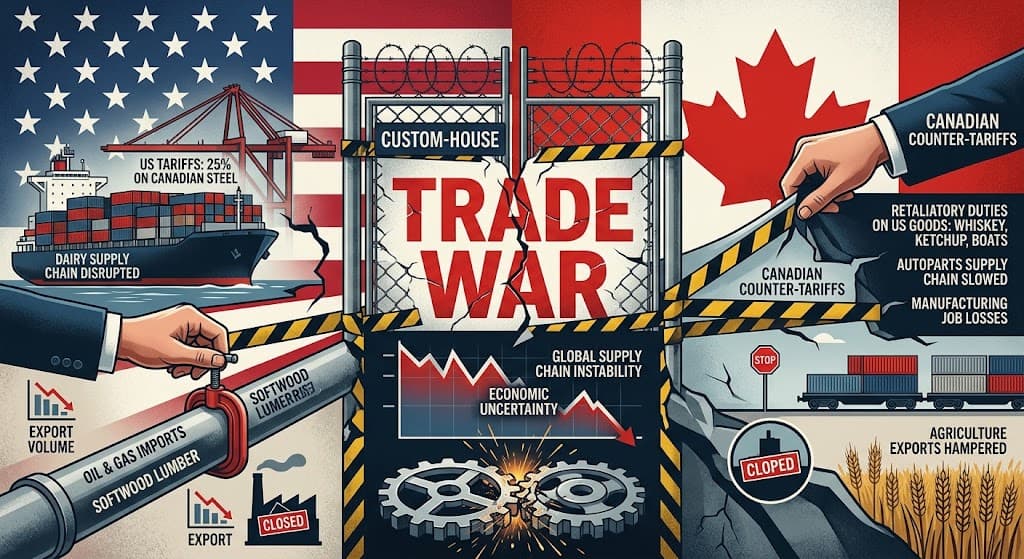
U.S.-Canada Trade Dispute Escalates as New Tariffs and Import Bans Take Shape
Photo: AI Generate Image by Arizona Asians
The U.S.-Canada trade dispute intensified this week as Canada’s retaliatory tariffs took effect and the White House announced new U.S. import bans and tariff changes targeting selected Canadian goods.
Washington, D.C. / Ottawa, Canada — The trade dispute between the United States and Canada has entered a new and more serious phase, with both countries moving ahead with new tariff actions after recent negotiations failed to produce an agreement.
Canada’s latest countermeasures took effect on September 8, 2026, targeting $27.6 billion in U.S. products. The Canadian government said the measures were a dollar-for-dollar response to U.S. tariffs on Canadian goods that took effect in August.
The new Canadian tariffs affect a wide range of American exports, including products in steel and aluminum, dairy, appliances, agricultural equipment, pulp and paper, plastics and electronics. In some sectors, Canada increased existing tariffs to 50% to match U.S. rates.
In response, the White House announced that President Donald Trump signed new actions under Section 338 of the Tariff Act of 1930, a rarely used trade authority that allows the president to impose duties or exclude products from a country accused of discriminating against U.S. commerce.
The White House said the new U.S. measures include import bans on certain Canadian products connected to alcohol, dairy and motor vehicles. The import bans are scheduled to take effect on September 29, 2026, while changes to the scope of some tariffs are scheduled to take effect on September 15, 2026.
U.S. officials said the actions are intended to protect American workers, farmers, manufacturers and exporters from what the administration describes as unfair treatment by Canada. The White House also said some Canadian products, including rock salt and cement, are being removed from earlier tariff coverage, while other products are being added.
Canada has rejected the U.S. position, saying the demands made during negotiations were not fair or economically sound. Canadian officials said the countermeasures are meant to defend Canadian workers and businesses while matching the impact of U.S. tariffs.
The dispute is notable because the United States and Canada are among the world’s closest trading partners. Their economies are deeply connected through autos, energy, agriculture, manufacturing, consumer goods and cross-border supply chains. Tariffs between the two countries can raise costs for businesses and may eventually affect consumers through higher prices or reduced product availability.
The escalation also places additional pressure on companies that operate across the U.S.-Canada border. Manufacturers that rely on parts, raw materials or finished goods from both countries may face higher costs, delayed shipments or changes in sourcing decisions.
For consumers, the effects may vary by product. Some items could become more expensive if companies pass tariff costs along to buyers. Other goods may become harder to find if import bans or supply-chain adjustments reduce availability.
The latest actions do not necessarily end the possibility of future negotiations. Trade disputes can change quickly if both sides return to talks or agree to remove specific measures. For now, however, the U.S.-Canada relationship is facing one of its sharpest trade conflicts in recent years.
Businesses and consumers should continue watching official updates from both governments, especially as the September 15 and September 29 U.S. deadlines approach.
Topics
Source: The White House
View original source ↗Editorial Note: Sources include official statements and tariff information from the White House, the Office of the U.S. Trade Representative and the Government of Canada.