
Typhoon Dolphin Brings Strong Winds and Heavy Rain to Eastern China as More Than One Million Evacuate
Typhoon Dolphin forced more than one million people to move to safer locations after striking eastern China with winds of about 151 kilometers per hour, flooding Shanghai and disrupting flights and transportation.
More than one million people were moved to safer locations as Typhoon Dolphin struck China’s eastern coast, bringing powerful winds, record rainfall, flooding and widespread transportation disruptions. The storm made landfall Sunday evening near Yuhuan in Zhejiang province with sustained winds of approximately 151 kilometers per hour, or 93 mph. It later made another landfall near Yueqing before weakening as it moved inland.
Although Dolphin had weakened into a tropical storm by Monday, authorities warned that its large rain bands could continue causing flash floods, urban flooding and landslides across Zhejiang, Shanghai, Jiangsu, Anhui and other parts of eastern China.
Widespread Evacuations
Local government figures indicated that more than 900,000 people were relocated in Wenzhou, where authorities opened over 1,500 emergency shelters.
Shanghai moved approximately 215,600 residents and workers from coastal areas, construction sites, temporary buildings and neighborhoods considered vulnerable to flooding. Additional evacuations were reported in Fujian and other provinces.
Because the numbers were released by different local authorities at different times, China had not issued a single consolidated national evacuation total as of Monday. Combined regional figures, however, placed the number moved to safety above one million.
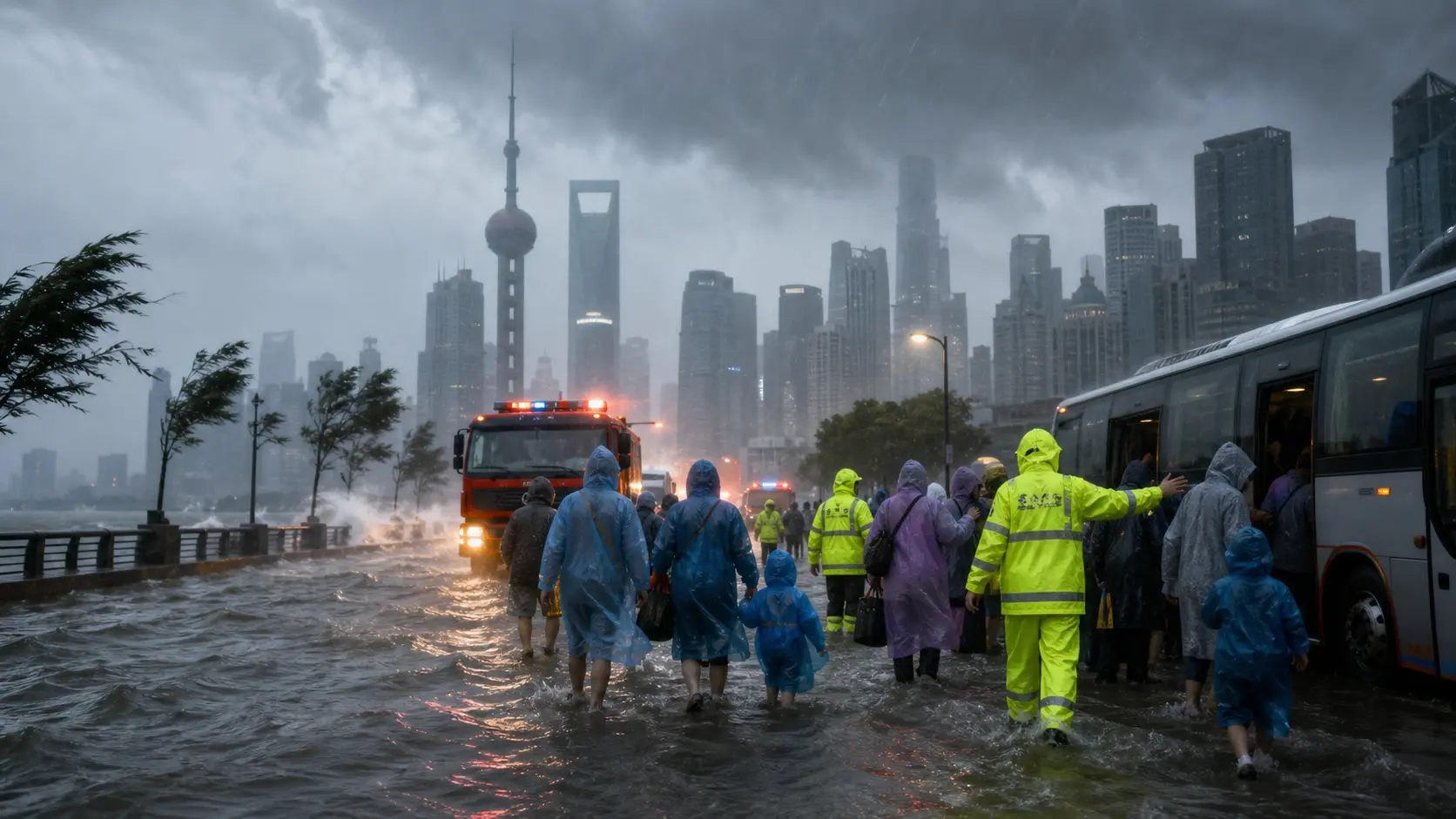
AI Generated Image
Record Rainfall Floods Shanghai
Heavy rain flooded roads and neighborhoods in parts of Shanghai and Zhejiang.
Shanghai’s Xujiahui weather station recorded approximately 312.9 millimeters, or 12.3 inches, of rain within 24 hours, reportedly the highest 24-hour total at the station since records began in 1872.
Emergency personnel responded to waterlogged streets, fallen trees and residents trapped in flooded homes. Authorities urged the public to stay away from rivers, low-lying neighborhoods, mountain slopes and other areas vulnerable to flooding or landslides.
Flights and Transportation Disrupted
The storm caused major interruptions to air, rail, road and maritime transportation.
More than 1,300 flights were canceled at Shanghai’s two major airports as the typhoon approached. Ferry services were suspended, coastal vessels returned to port and some train and metro operations were adjusted.
Schools, parks, tourist attractions and outdoor businesses in high-risk areas were also temporarily closed.
Travelers should confirm flight and train schedules directly with airlines and transportation authorities before beginning their journeys.
Storm Expected to Continue Weakening
The China Meteorological Administration said Dolphin was moving northwest while continuing to lose strength. Even after a typhoon weakens, its remaining moisture can produce dangerous rainfall far from the coast. Officials therefore continued monitoring rivers, reservoirs, drainage systems and areas susceptible to geological disasters. Emergency crews were deployed across affected regions to conduct rescues, remove fallen trees, restore transportation and inspect damaged infrastructure.
Regional Weather Risks Continue
Dolphin arrived during the height of the western Pacific typhoon season, when warm ocean temperatures can support the development of powerful tropical systems.
Eastern China’s densely populated coastal region includes major cities, ports, factories and transportation networks. Strong typhoons can therefore affect millions of residents while disrupting domestic and international supply chains. Residents in affected areas were advised to follow instructions from local authorities, avoid unnecessary travel and monitor updates from China’s National Meteorological Center.
Topics
Source: Shanghai municipal authorities and Zhejiang provincial emergency authorities.
View original source ↗