
Thousands evacuated as India braces for second cyclone in a week
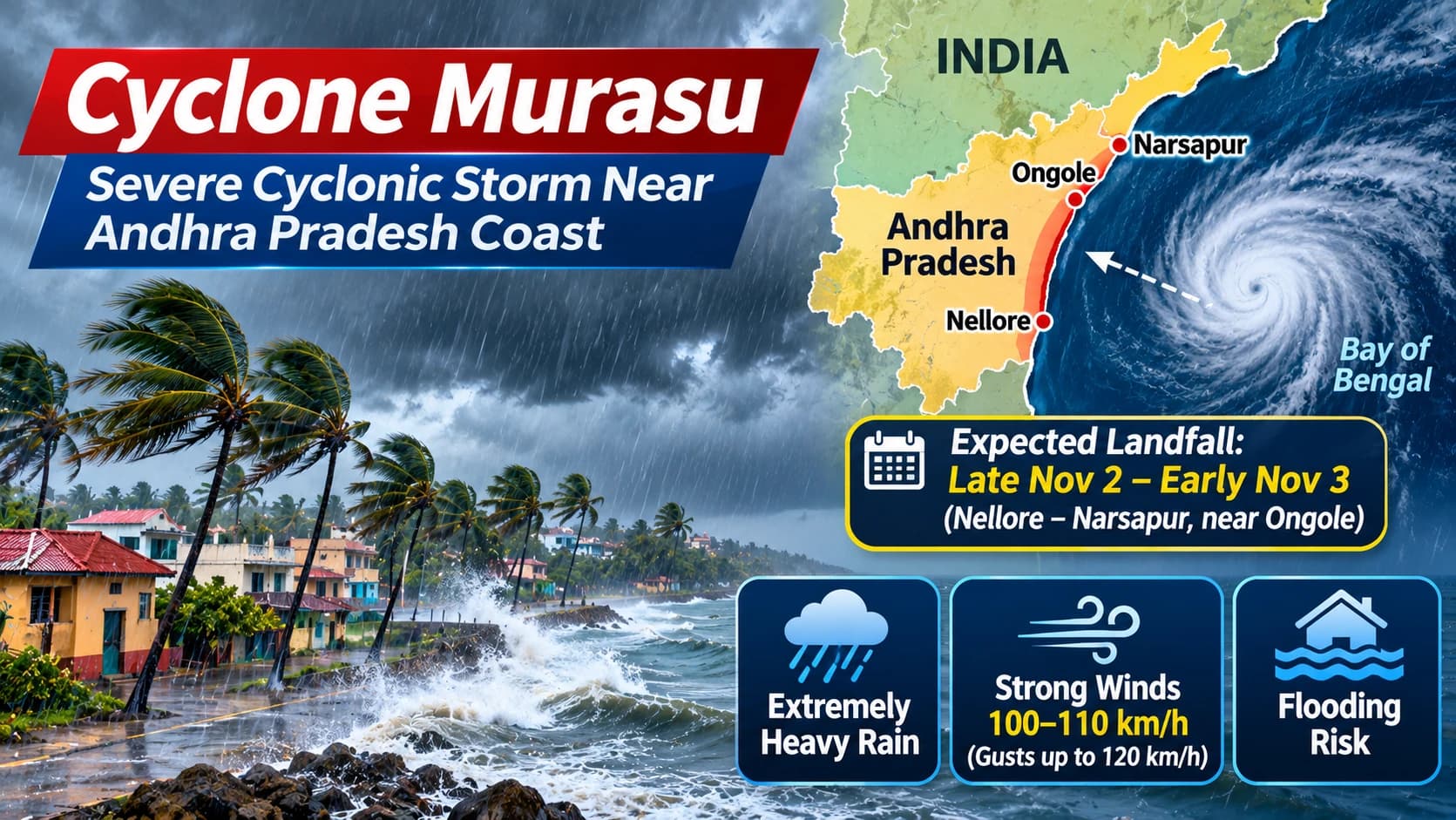
Cyclone Murasu threatens coastal Andhra Pradesh with heavy rain, strong winds and renewed flooding risk.
Photo: Arizona Asians / AI-generated image
India’s east coast is facing another round of severe weather just days after Cyclone Arnab caused damage and disruption across Andhra Pradesh and neighboring areas. Officials say the new system, Cyclone Murasu, could bring heavy rain, strong winds and renewed flooding risks to densely populated coastal districts.
Authorities in India moved thousands of people to shelters as the country braced for a second cyclone in less than a week, with a new storm system threatening the eastern coast after Cyclone Arnab caused destruction and evacuations last week. The latest weather threat, Cyclone Murasu, is expected to bring heavy rain, strong winds and the risk of flooding across parts of Andhra Pradesh.
The immediate concern is centered on coastal communities in Andhra Pradesh, where millions live in low-lying districts exposed to storm surge, rainfall and wind damage. Officials have warned that the situation could affect transportation, power supply and local livelihoods, especially in areas already weakened by the earlier cyclone.
India’s eastern shoreline is regularly hit by tropical cyclones in the Bay of Bengal, and disaster officials have spent years building warning systems, shelters and response teams to reduce casualties. Even so, repeated storms in quick succession can strain emergency services and complicate evacuation efforts, particularly in densely populated stretches of coast.
Warnings intensify as landfall nears
The India Meteorological Department said on November 2, 2026, that the severe cyclonic storm Murasu was over the west-central Bay of Bengal. The department said the system was expected to intensify and move toward the Andhra Pradesh coast, with landfall forecast for the region in the following day or two.
The earlier cyclone, Arnab, made landfall on October 28, 2026, and left a trail of damage that included flooding, fallen trees and disruptions to flights and train services. Reuters-reported figures cited in coverage of that storm said nearly 50,000 people had been moved to shelters in Andhra Pradesh by Monday night, out of an estimated 400,000 who needed evacuation. Separate coverage also reported that at least 180,000 people were evacuated from Andhra Pradesh and Odisha ahead of Arnab’s landfall.
The rapid back-to-back storm threat has raised fresh concerns in a region that has spent decades trying to reduce cyclone deaths through better forecasting and emergency planning. With another strong system on approach, officials are focusing on evacuations, sheltering and coastal readiness while residents face the prospect of another round of severe weather within days.
Topics
Source: India Meteorological Department
View original source ↗