
The Rare but Deadly Food Poisoning Everyone Should Know About
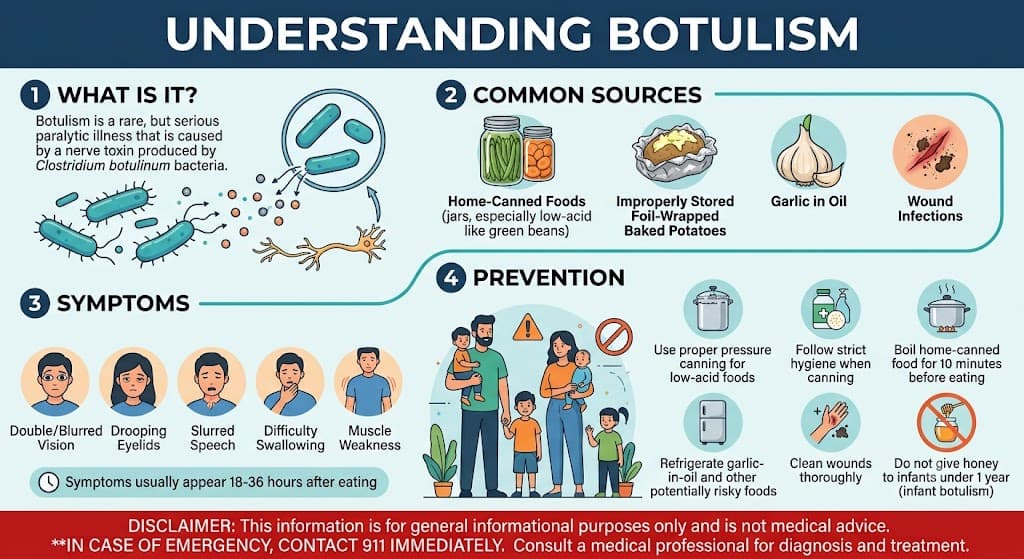
The Rare but Deadly Food Poisoning Everyone Should Know About
Botulism is uncommon, but it can cause paralysis, breathing failure and death. Improperly stored foods—including foil-wrapped baked potatoes—can create conditions where the toxin develops.
Botulism is a rare but potentially fatal illness caused by a toxin produced by Clostridium botulinum and related bacteria. The toxin attacks the nervous system and can cause muscle paralysis, breathing difficulty and death if treatment is delayed.
Many people associate botulism mainly with improperly canned foods. However, public-health agencies have also linked it to foods such as garlic stored in oil, fermented foods and baked potatoes sealed in aluminum foil and left at room temperature.
How botulism develops
Clostridium botulinum spores are found naturally in soil, water and other parts of the environment. The spores can survive normal cooking temperatures. When they enter a low-oxygen environment and are held at an unsafe temperature, they may grow and produce botulinum toxin.
A tightly foil-wrapped baked potato can create such a low-oxygen environment. If the potato is then left at room temperature or held below a safe hot-holding temperature, the risk increases. The BC Centre for Disease Control advises eating foil-wrapped baked potatoes within two hours, keeping them at 140°F or hotter, or refrigerating them within two hours.
The U.S. Department of Agriculture also identifies baked potatoes sealed in aluminum foil among foods that have been associated with botulism.
Symptoms can progress quickly
Botulism symptoms may include:
Difficulty swallowing
Muscle weakness
Double or blurred vision
Drooping eyelids
Slurred speech
Difficulty breathing
Nausea, vomiting, stomach pain or diarrhea
Symptoms of foodborne botulism often begin about 18 to 36 hours after contaminated food is eaten, although they may appear earlier or several days later.
Because the toxin interferes with nerve signals, weakness may progress downward from the face and eyes to the throat, chest and limbs. Breathing muscles can eventually become affected.
Botulism is a medical emergency
Anyone who develops difficulty swallowing, double vision, slurred speech, severe muscle weakness or breathing problems after eating potentially unsafe food should seek emergency medical care immediately.
Botulism cannot be diagnosed safely at home, and waiting for symptoms to improve can be dangerous. Early treatment can reduce the risk of complications.
How to reduce the risk
When preparing baked potatoes in foil:
Serve them promptly after cooking.
Keep them at 140°F or hotter until served.
Refrigerate them within two hours.
During outdoor temperatures above 90°F, refrigerate perishable food within one hour.
Do not leave foil-wrapped potatoes overnight on a counter or in a switched-off oven.
Keep refrigerated potatoes at 40°F or below.
Throw away potatoes that have been left at an unsafe temperature for too long.
USDA guidance identifies the range between 40°F and 140°F as the food-safety “danger zone,” where bacteria can multiply rapidly. Hot foods should be kept at 140°F or above, and refrigerated foods at 40°F or below.
Public-health guidance also recommends keeping foil-wrapped baked potatoes hot until they are served or refrigerating them promptly.
Do not rely on appearance, smell or taste
Food containing botulinum toxin may not look, smell or taste spoiled. Tasting questionable food is therefore not a safe way to determine whether it can be eaten.
When the storage history of a foil-wrapped potato or another potentially risky food is uncertain, the safest decision is to discard it.
This article provides general food-safety information and is not a substitute for professional medical advice. Suspected botulism requires immediate emergency medical care.
Source: U.S. Centers for Disease Control and Prevention; U.S. Department of Agriculture Food Safety and Inspection Service; Public Health Agency of Canada; BC Centre for Disease Control.
Editorial Comment:
Arizona Asians independently prepared this article using publicly available government and public-health information, with additional editorial review.
Suggested image caption:
Botulism is rare, but improper storage of foil-wrapped baked potatoes and other low-oxygen foods can allow a dangerous toxin to develop.
Featured-image alt text:
Illustration explaining botulism causes, symptoms, common food sources and prevention steps.