
Supreme Court weighs whether climate lawsuits against oil companies can proceed
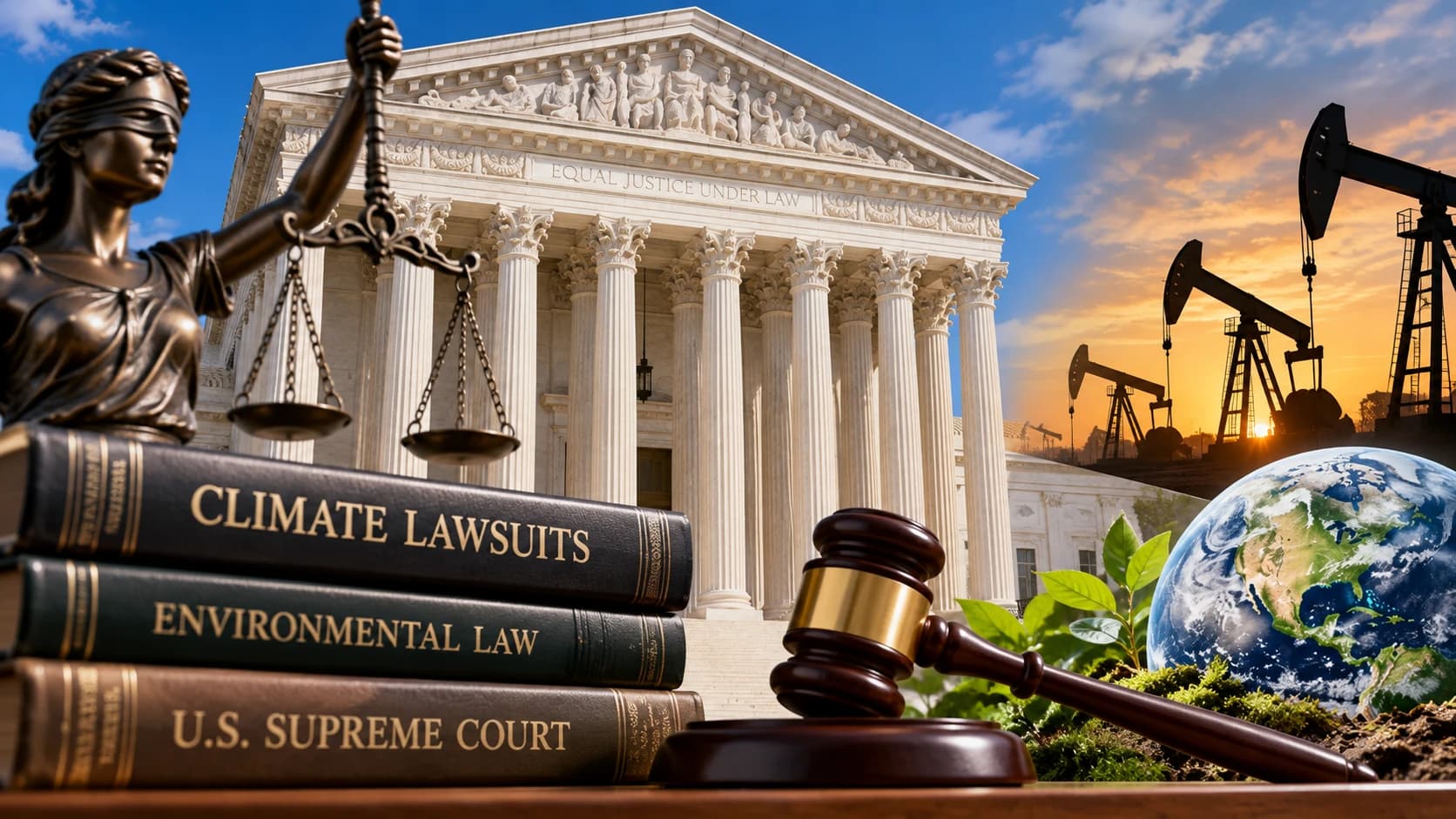
AI-generated illustration representing the U.S. Supreme Court’s consideration of whether climate-related lawsuits against oil companies may proceed.
Photo: Arizona Asians / AI-generated image
The U.S. Supreme Court heard arguments Monday in a closely watched climate case that could affect whether state and local governments can pursue damages from oil companies over greenhouse gas emissions. The dispute centers on whether federal law blocks those claims before they can move ahead in state court.
The U.S. Supreme Court heard arguments Monday in a climate lawsuit that could shape whether state and local governments may continue seeking damages from oil companies over alleged harm from greenhouse gas emissions. The case comes as the justices consider whether federal law preempts claims brought under state nuisance and related legal theories.
At issue is a lawsuit filed by Boulder County, Colorado, against Suncor Energy and Exxon Mobil, among others. The county has argued that fossil fuel companies should be held responsible for climate-related damages, while the companies contend the claims are barred because they are governed by federal law rather than state law.
The dispute fits into a broader wave of climate litigation filed by cities, counties and states seeking to force oil and gas companies to pay for or help address the costs of climate change. Similar cases have moved through state and federal courts for years, with defendants arguing that such lawsuits intrude on a national regulatory framework for energy and emissions.
A ruling with national consequences
The Colorado Supreme Court previously allowed the Boulder County case to proceed, setting up the appeal now before the justices. Oil industry groups and companies have warned that letting the claims move forward could open the door to large damage awards and inconsistent state-by-state standards, while climate advocates say the lawsuits are a way to assign accountability for the costs of warming driven by fossil fuel use.
The Supreme Court has not yet said how it will rule, and no timeline has been announced for a decision. The court’s eventual opinion could affect not only the Boulder County case but also similar suits elsewhere that depend on whether state courts may hear claims tied to climate harms.
Topics
Source: Supreme Court of the United States
View original source ↗