
Phoenix reaches 200 miles of cool pavement as city expands heat-mitigation efforts
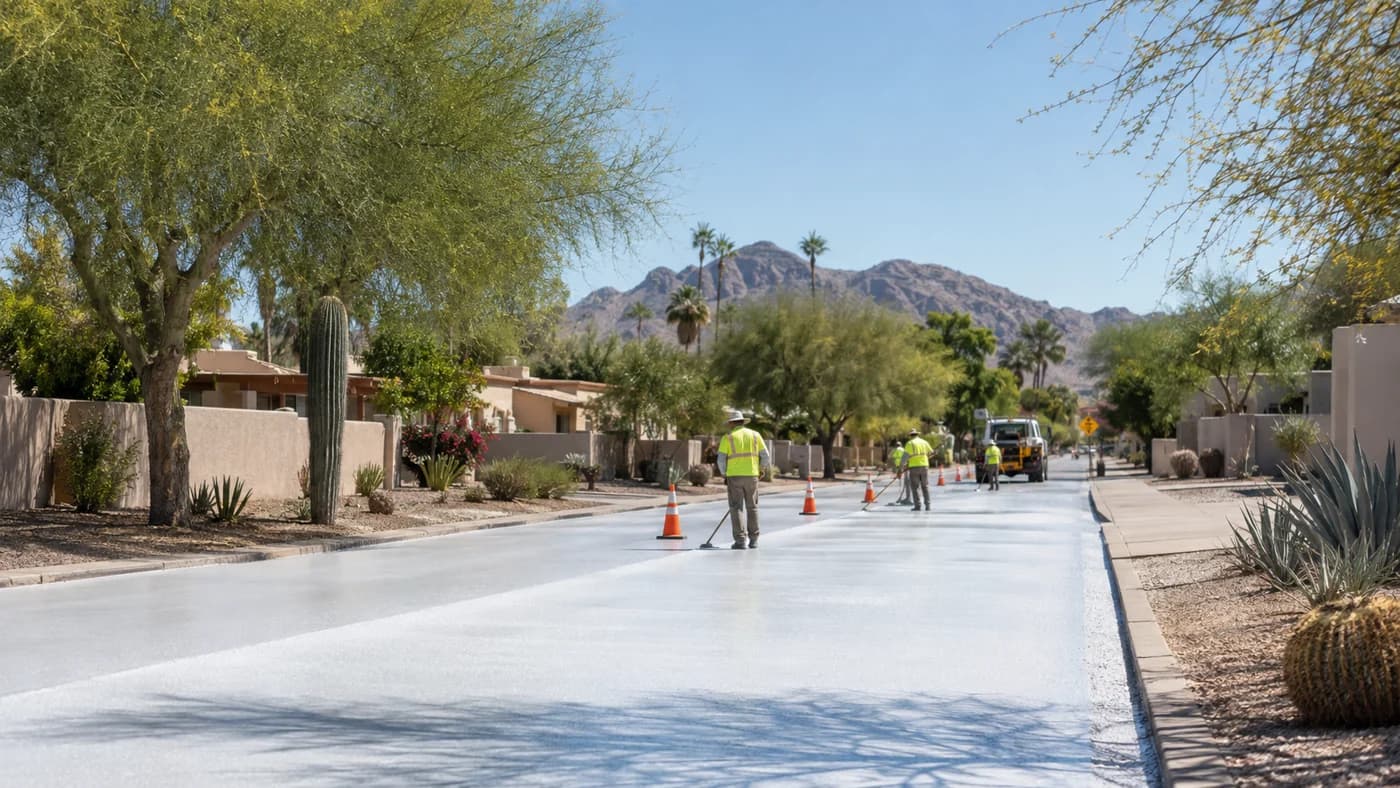
Phoenix has reached 200 miles of cool pavement as part of its broader heat-mitigation efforts.
Photo: AI-generated image by Arizona Asians
Phoenix has coated 200 miles of streets with reflective cool pavement, a milestone in the city’s years-long effort to reduce surface temperatures and blunt the urban heat island effect. Officials say the treatment is now part of a broader set of strategies as Phoenix continues grappling with extreme heat.
Phoenix has now applied cool pavement coating to 200 miles of city streets, marking a new milestone in a program the city launched in 2020 to help curb the urban heat island effect. The reflective coating is designed to lower pavement surface temperatures, even as officials continue to study how much it improves conditions for people walking nearby.
The milestone matters in a city where summer heat has become a defining public-safety and infrastructure challenge. The cool pavement work affects streets across Phoenix’s roadway system, which covers thousands of miles, and is part of broader efforts to reduce heat exposure in neighborhoods that can be especially vulnerable during prolonged hot weather.
City officials began testing the treatment in 2020 before expanding it into a regular pavement-maintenance program. Phoenix has since partnered with Arizona State University researchers to evaluate how the coating performs over time and whether it produces measurable benefits beyond a cooler street surface.
How the program has developed
According to the city, the cool pavement pilot began with residential street applications and later moved beyond the initial trial phase. The program has been incorporated into Phoenix’s ongoing pavement work, and the city says the recent 200-mile mark reflects years of expansion rather than a single project or neighborhood rollout.
The city’s own program materials say the treatment is intended to increase street-reflectivity and help mitigate heat buildup. At the same time, ASU-linked evaluations have examined whether the coating meaningfully reduces heat exposure at the street level and what tradeoffs may come with that cooling effect.
Phoenix’s street maintenance division has described cool pavement as one part of a larger maintenance and heat-response strategy that also includes other roadway and shade-related efforts. The city has not said the 200-mile total represents the end of the program, and officials continue to position the work as ongoing as Phoenix faces another year of extreme heat concerns.
Topics
Source: City of Phoenix
View original source ↗