
Phoenix Housing Market Shifts Toward Buyers as Price Cuts and Negotiation Return
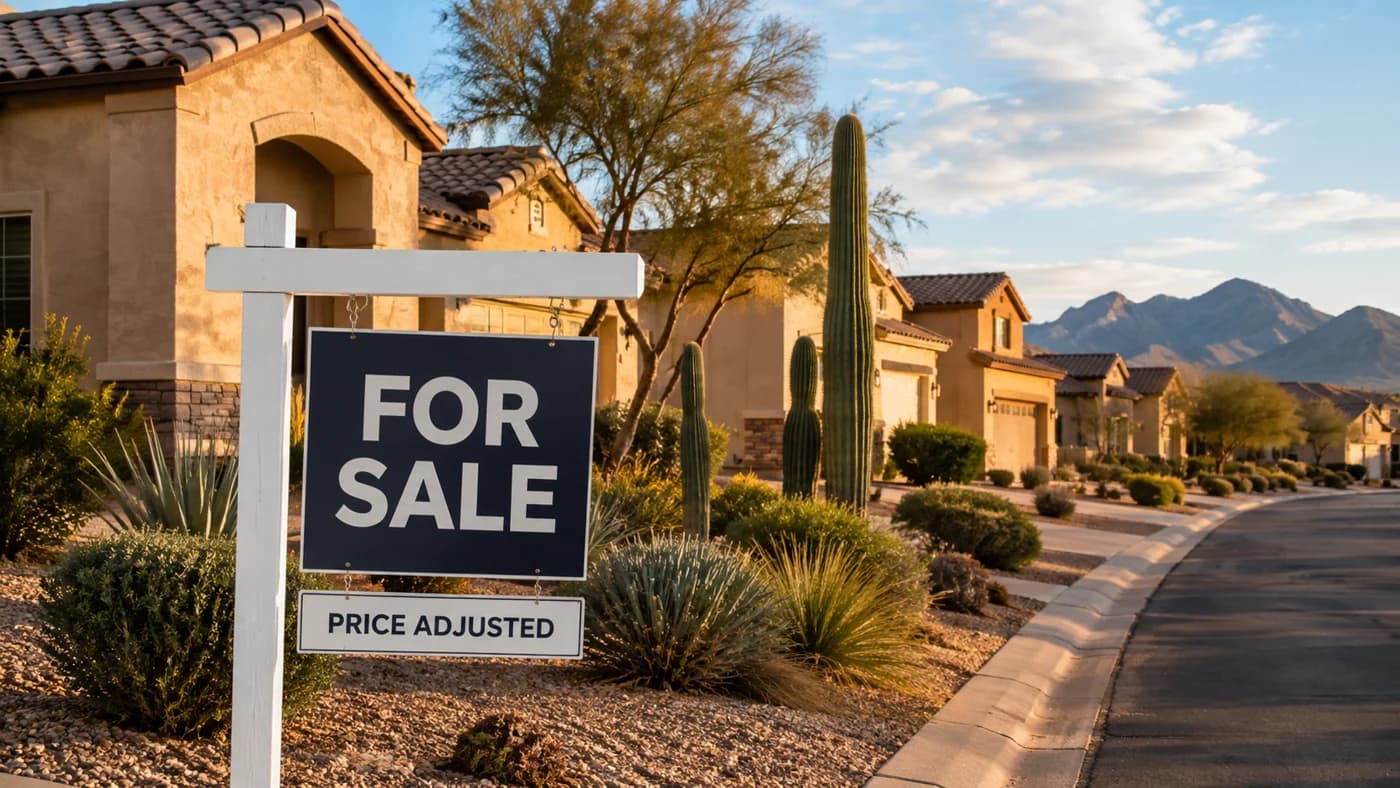
Price adjustments and higher mortgage rates are giving Phoenix-area buyers more room to negotiate.
Photo: AI-generated image by Arizona Asians
The Phoenix-area housing market is showing clearer signs of buyer leverage, with more homes selling below original list price, elevated mortgage rates limiting affordability, and sellers needing sharper pricing strategies.
Phoenix, Arizona — The Phoenix-area housing market is continuing to drift toward buyers, though conditions remain different by city, price range and property type.
Recent market data shows that buyers have more negotiating room than they did during the highly competitive pandemic-era market. According to the August 2026 ARMLS STAT report, which reviewed July activity, 75% of single-family homes sold below their original list price, while only 12% sold above original list price. ARMLS noted that sellers should be cautious about calling the market a full seller recovery because most closings are still happening below initial expectations.
The shift is being driven largely by affordability. Mortgage rates remain elevated, with Freddie Mac reporting that the average 30-year fixed mortgage rate reached 6.71% as of September 3, 2026. Higher monthly payments continue to limit how far buyers can stretch, even when they are interested in purchasing.
For Phoenix and nearby suburbs, this means sellers can no longer assume that homes will sell quickly simply because inventory is limited. Pricing, condition, location and presentation matter much more than they did a few years ago.
Buyers Are Gaining Room to Negotiate
The clearest sign of buyer leverage is the number of homes selling below the original asking price. ARMLS reported that three out of four single-family closings in July were below the original list price. That does not mean every buyer can make a low offer and expect success. Homes that are updated, well-located and priced correctly can still attract strong interest. ARMLS also noted that above-list sales were most visible in more attainable price ranges, especially homes under $400,000, with activity concentrated in Phoenix, San Tan Valley, Surprise and Mesa. Still, for homes that have been sitting on the market, buyers may have more room to ask for price reductions, closing-cost help, repairs or other concessions.
Sellers Need More Realistic Pricing
The market is sending a clear message to sellers: pricing too high at the beginning can lead to delays and later reductions. During the hottest years of the market, many sellers could list aggressively and still receive multiple offers. Today’s buyers are more cautious. They are comparing similar homes, calculating mortgage payments carefully and watching for price cuts. For sellers in Phoenix, Chandler, Gilbert, Mesa, Scottsdale, Peoria, Surprise and other Valley suburbs, the best strategy is to price close to current comparable sales rather than relying only on old peak-market expectations.
A well-priced home can still sell. An overpriced home may sit longer and eventually need a reduction.
Inventory and Demand Are Sending Mixed Signals
The market is not weak across the board. Realtor.com data for the Phoenix-Mesa-Chandler metro showed the August 2026 median listing price at about $475,000, down from a year earlier, while active listings increased year over year. That gives buyers more options than they had in tighter periods. At the same time, inventory is not excessive compared with historical levels, and some affordable homes continue to move quickly. Redfin data for Maricopa County showed median sale prices slightly higher year over year over the three months ending July 2026, while homes were still taking about two months to sell on average. This points to a market that is not collapsing, but cooling. Buyers have more power than before, while sellers still have opportunities if they are realistic.
Outlook for the Rest of 2026
The Phoenix-area housing market will likely remain sensitive to mortgage rates through the rest of 2026. If mortgage rates stay near the high-6% range, buyer demand may remain cautious, especially for first-time buyers and families trying to manage monthly payments. That could keep pressure on sellers to negotiate. If rates move lower, some buyers who have been waiting could re-enter the market, especially in popular suburbs and in more affordable price ranges. That could stabilize prices and reduce some buyer leverage. For now, the outlook is balanced but buyer-friendly compared with recent years. Buyers should be prepared, pre-approved and patient. Sellers should focus on accurate pricing, strong presentation and flexibility during negotiations.
The Phoenix market is no longer the “name your price” market of 2021. It is a more disciplined market where serious buyers and realistic sellers are more likely to reach a deal.
Topics
Source: ARMLS STAT Report
View original source ↗Editorial Note: Sources include ARMLS, Freddie Mac, Realtor.com, Redfin and Federal Reserve economic data. Market conditions vary by city, neighborhood, price range and property condition.