
Arizona home values soften as high mortgage rates keep affordability under pressure
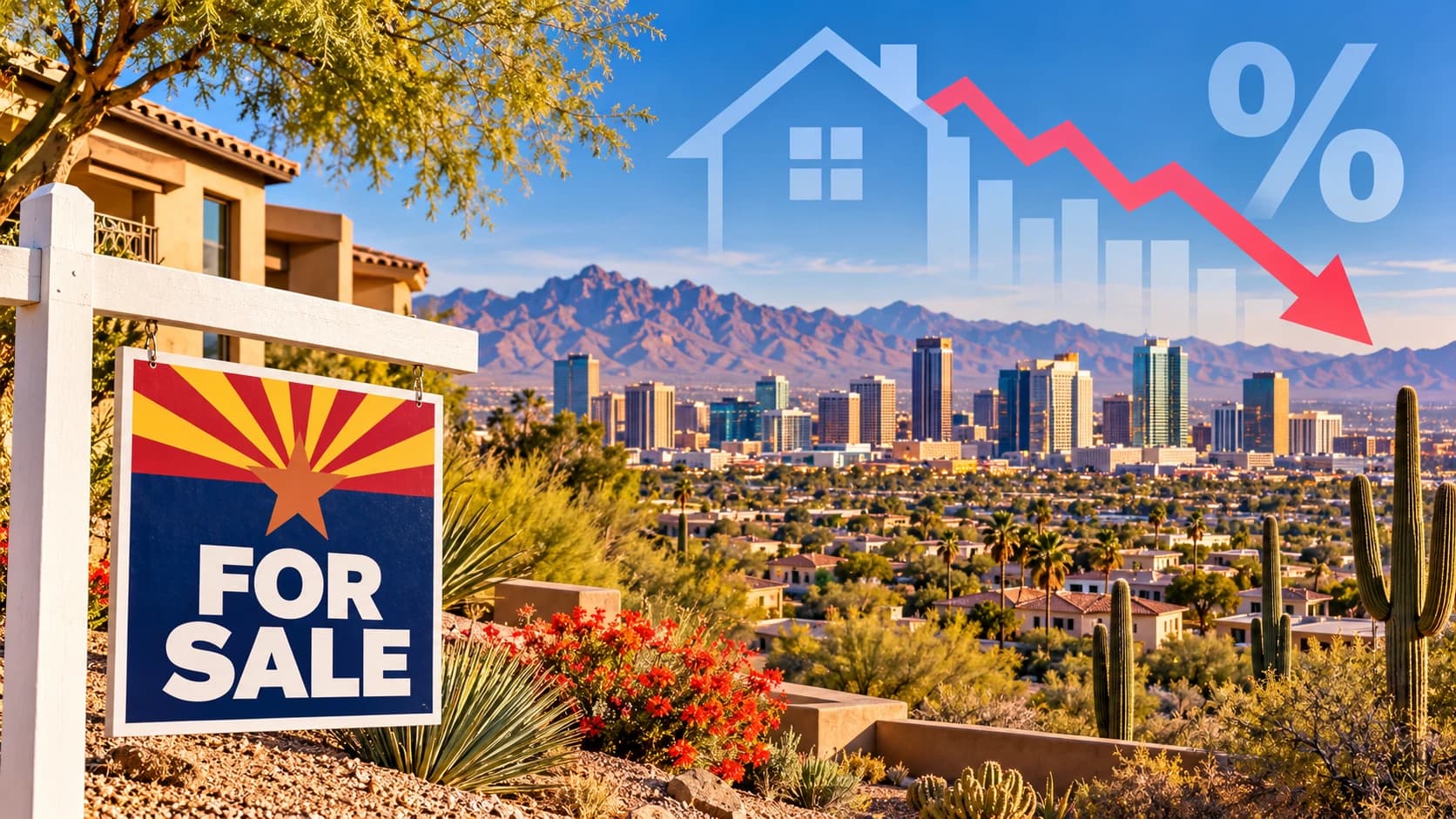
Arizona’s cooling housing market as elevated mortgage rates, affordability challenges and softer home values continue to shape buyer demand.
Photo: Arizona Asians / AI-generated image
Phoenix home prices are showing signs of cooling as higher mortgage rates limit how much buyers can afford, while statewide housing officials continue to push affordability programs. Recent market data show mixed signals: some measures still point to resilient prices, but others show annual declines and slower demand.
Arizona’s housing market continued to cool in September 2026 as elevated mortgage rates weighed on buyers and home values edged lower across the state.
Zillow reported the typical Arizona home value at $416,733 as of September 30, down 1.0% from a year earlier. Homes were going pending in about 39 days, while the statewide median sale-to-list ratio stood at 0.986, meaning homes generally sold slightly below their asking price.
Redfin showed a similar pattern. Its September data put Arizona’s median sale price at $437,289, down 0.59% year over year. The number of homes sold fell 2.9%, while the number of homes for sale increased 1.2% from a year earlier.
Taken together, the figures point to a market that is still functioning but has lost some of the momentum seen during the pandemic-era housing surge.
## High mortgage rates continue to limit purchasing power
Borrowing costs remain one of the biggest obstacles for Arizona buyers.
Freddie Mac reported that the average 30-year fixed mortgage rate was 7.40% on October 8, up from 7.28% a week earlier. Freddie Mac notes that higher mortgage rates directly reduce homebuyers’ purchasing power by increasing monthly borrowing costs.
That pressure matters in Arizona because home prices remain well above their pre-pandemic levels even after recent declines.
State budget officials have also acknowledged the affordability problem. Arizona’s FY2027 Executive Budget summary said housing affordability remains impaired compared with pre-pandemic standards, even as some housing costs have begun to ease. The report cited Federal Reserve Bank of Atlanta data showing housing costs in Phoenix had fallen to about 43% of median income, down from 46% earlier in the year, while Tucson had fallen to about 42%.
## Phoenix shows the same cooling trend
Phoenix remains one of the clearest examples of the broader statewide slowdown.
Zillow reported a typical Phoenix home value of $404,067 in September, down 1.2% year over year, with homes going pending in around 34 days. The company reported 5,372 homes for sale and 1,424 new listings at the end of September.
Redfin, using a different methodology, reported a median Phoenix sale price of $452,285 over the three months ending September, up 0.5% from a year earlier. Phoenix recorded 3,810 sales in September, down 1.8%, while homes took about 60 days to sell.
The difference between Zillow and Redfin does not necessarily indicate a contradiction. Zillow tracks estimated typical home values, while Redfin reports actual sale prices derived from MLS and public-record transactions.
## Buyers have more choices, but affordability remains difficult
Inventory has improved somewhat.
Zillow reported 37,111 homes for sale statewide at the end of September, while Redfin counted 48,798 homes for sale, up 1.2% from a year earlier. The difference reflects the companies’ different data sources and methodologies, but both suggest that buyers have more options than during the tightest years of the housing boom.
Redfin also reported that 22.6% of Arizona homes had price reductions, up from 19% a year earlier. Only 14.2% sold above list price.
Those conditions give buyers more room to negotiate, but high mortgage rates continue to offset much of the benefit from softer prices.
## Arizona expands programs aimed at affordability
The Arizona Department of Housing continues to operate programs aimed at helping first-time buyers.
Its Arizona is Home program provides down-payment assistance to qualifying first-time homebuyers in Maricopa and Pima counties. Buyers earning up to 120% of area median income may qualify for assistance structured as a silent second mortgage.
The department reported that the program helped 704 first-time homebuyers purchase homes in fiscal year 2025, providing about $13.7 million in assistance. The program can help with down payments, closing costs and mortgage interest-rate reductions.
Arizona has also introduced the State Affordability Infrastructure District program, which allows tax-exempt bonds to finance roads, water and sewer infrastructure intended to support additional housing development and lower upfront development costs.
## A slower market, not a collapse
Arizona’s current housing data point more toward a gradual recalibration than a broad housing crash.
Home values are down modestly, sales volumes have weakened, listings have increased and buyers are taking more time. At the same time, prices remain historically high, mortgage rates remain elevated and affordability continues to be a challenge for many households.
For buyers, the market may offer more negotiating leverage than it did several years ago. For sellers, pricing homes realistically has become increasingly important as buyers face higher monthly payments and more choices.
The defining issue for Arizona housing in late 2026 is therefore not simply whether prices rise or fall. It is whether incomes, mortgage rates, housing supply and available assistance programs can bring ownership within reach for more Arizona families.
Sources: Arizona Department of Housing; Arizona Finance Authority; Arizona Office of Strategic Planning and Budgeting; Freddie Mac; Zillow; Redfin.
### Source links
Arizona Department of Housing — Homebuyer programs
https://housing.az.gov/general-public
Arizona Finance Authority — State Affordability Infrastructure District program
Arizona FY2027 Executive Budget — Housing section
https://ospb.az.gov/sites/default/files/2026-01/executive-budget-summary-fy-2027.pdf
Freddie Mac — Current mortgage rates
Topics
Source: Arizona Department of Housing — Arizona is Home
View original source ↗Editorial Note: Please also verify other sources mentioned in the article