
Panama Canal to Reduce Daily Ship Transits as El Niño Strains Water Supply
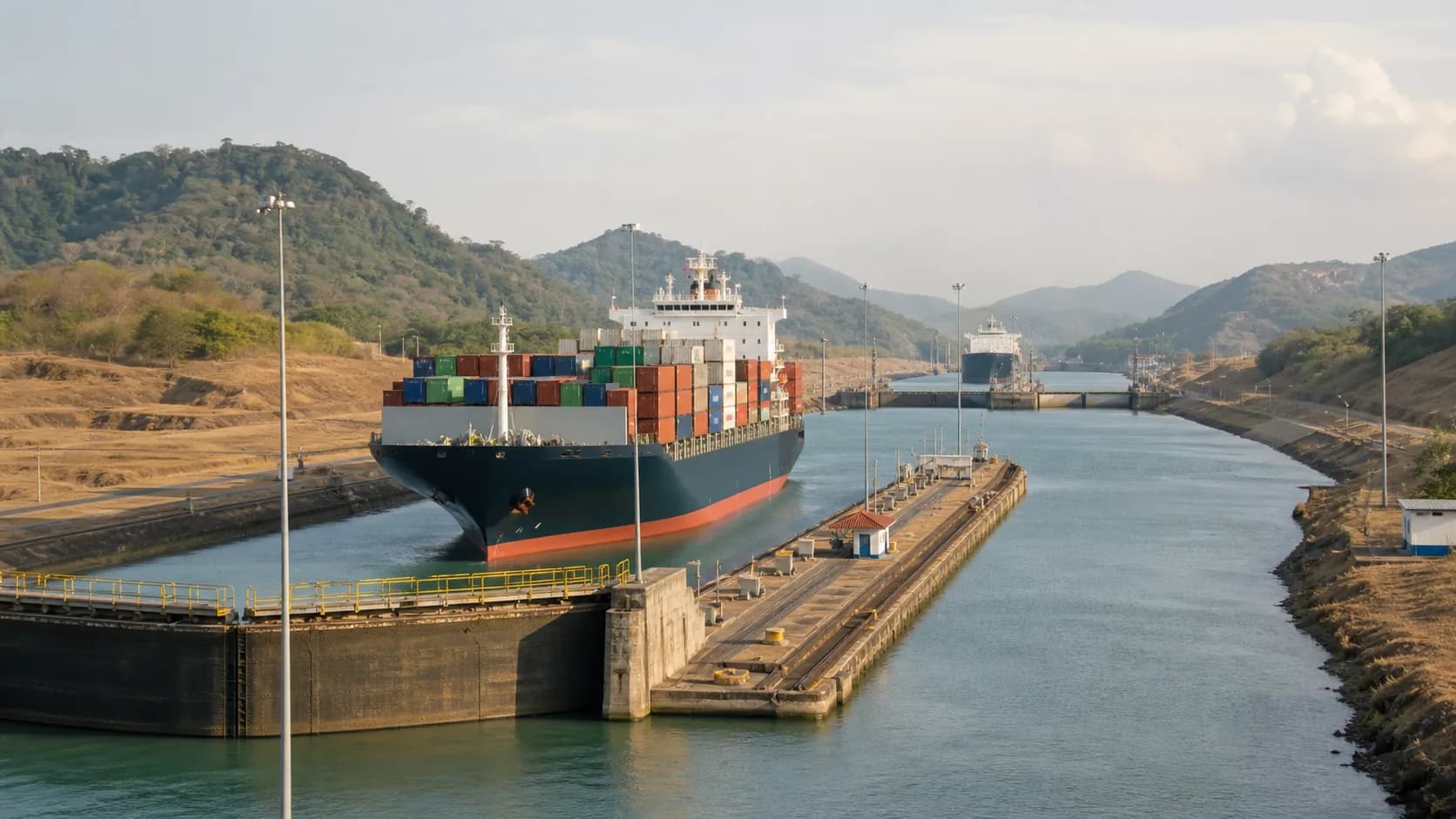
A container ship moves through a canal lock system as reduced rainfall affects transit capacity
Photo: AI-generated image by Arizona Asians
The Panama Canal will temporarily reduce the number of ships allowed through the waterway as lower-than-expected rainfall and El Niño conditions pressure the canal’s freshwater supply.
Panama City, Panama - The Panama Canal Authority will temporarily reduce daily ship transits in September as reduced rainfall in the canal watershed continues to affect water availability. The canal announced additional operational measures after below-expected precipitation, despite Panama’s rainy season and earlier water-saving efforts tied to the El Niño climate pattern.
Starting September 3, 2026, the canal will adjust available daily transit slots to nine at the Neopanamax Locks and 25 at the Panamax Locks. Beginning September 15, Panamax slots will be reduced further to 23, bringing total daily capacity down to 32 ships. The Panama Canal depends on freshwater from its watershed and lake system to move vessels through its locks. When rainfall is lower than expected, authorities must balance global shipping demand with long-term water sustainability and local water needs. The canal said vessels without confirmed reservations may face longer waiting times. It urged customers to use the Transit Reservation, or booking, system, noting that a confirmed reservation is the only way to guarantee a transit date.
The restrictions matter far beyond Panama. The canal is one of the world’s most important trade routes, connecting the Atlantic and Pacific oceans and serving cargo moving between Asia, the Americas and Europe. Fewer daily crossings can affect shipping schedules, freight costs, supply chains and delivery timelines.
The authority said it will continue monitoring weather conditions, watershed inflows and lake levels, and may announce additional adjustments if conditions change.
For businesses and consumers, the move is another reminder that climate patterns can directly affect global trade. A dry season or weak rainfall in one key transportation corridor can ripple through shipping routes, costs and inventory planning around the world.
Topics
Source: Panama Canal Authority
View original source ↗Editorial Note: Panama Canal Authority advisory