
Newsom moves to commute all 548 California death sentences
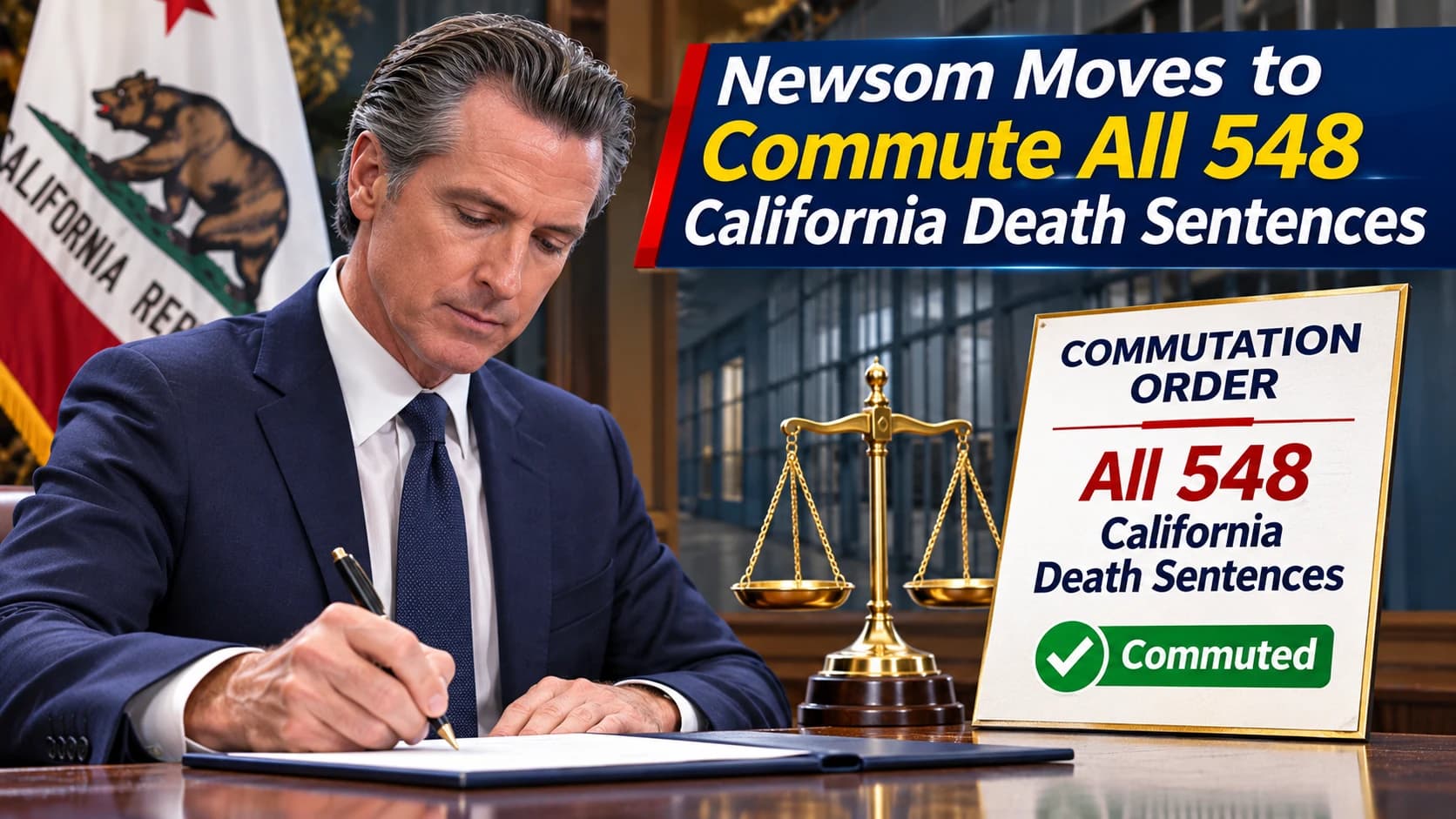
Newsom moves to commute all 548 California death sentences.
Photo: Arizona Asians / AI-generated image
California Gov. Gavin Newsom said Thursday he will commute every death sentence in the state to life without parole, a move that would affect 548 prisoners on death row. The decision follows years of moratoriums, courtroom reviews and debate over whether capital punishment should remain in California.
California Gov. Gavin Newsom said Thursday he will commute all 548 death sentences in the state to life in prison without the possibility of parole, an extraordinary decision that would empty California’s death row and end the prospect of future executions for those prisoners. The move affects the nation’s largest death row and marks the most sweeping clemency action of his governorship.
Newsom’s decision affects 529 men and 19 women, according to numbers his office provided. The commutations would not free any prisoner, but they would eliminate death sentences statewide and replace them with life without parole, a punishment that keeps inmates incarcerated for life unless a separate legal process changes their sentence.
The governor has long opposed capital punishment in California. In 2019, he imposed a moratorium on executions, saying he would not oversee any execution while governor, and ordered the state’s death chamber at San Quentin closed. That order did not alter existing sentences, but it effectively froze the system while legal and political challenges played out.
A sweeping break from California’s death penalty system
California has not carried out an execution since 2006, even though hundreds of people remained on death row. Over the years, the state’s death penalty has been slowed by litigation over execution protocols, repeated ballot fights over abolition and a growing number of resentencings and reversals. Newsom’s latest action goes further than the 2019 moratorium by changing the sentences themselves.
The governor’s office has not released a complete public explanation of every individual case in the commutation action, and it was not immediately clear Thursday how the state would handle any remaining legal or administrative steps tied to the order. Newsom has previously used clemency in a smaller number of cases, including pardons and commutations for prisoners who were able to show rehabilitation or other circumstances warranting review.
The decision is likely to intensify a familiar political divide in California, where voters have repeatedly debated the future of capital punishment. Supporters of abolition have long argued that the death penalty is costly, flawed and incompatible with modern justice, while opponents have said it remains a lawful punishment in the most serious cases. Newsom’s move places that long-running debate back at the center of state politics.
For families of victims, inmates and the broader criminal justice system, the commutations represent a definitive shift: California’s death penalty would remain on the books, but no one currently sentenced to die would still face execution. The practical result would be a permanent end to capital punishment for the state’s condemned prisoners under Newsom’s tenure.
Topics
Source: Governor of California
View original source ↗