
AfD says parties should work with it after Saxony-Anhalt victory
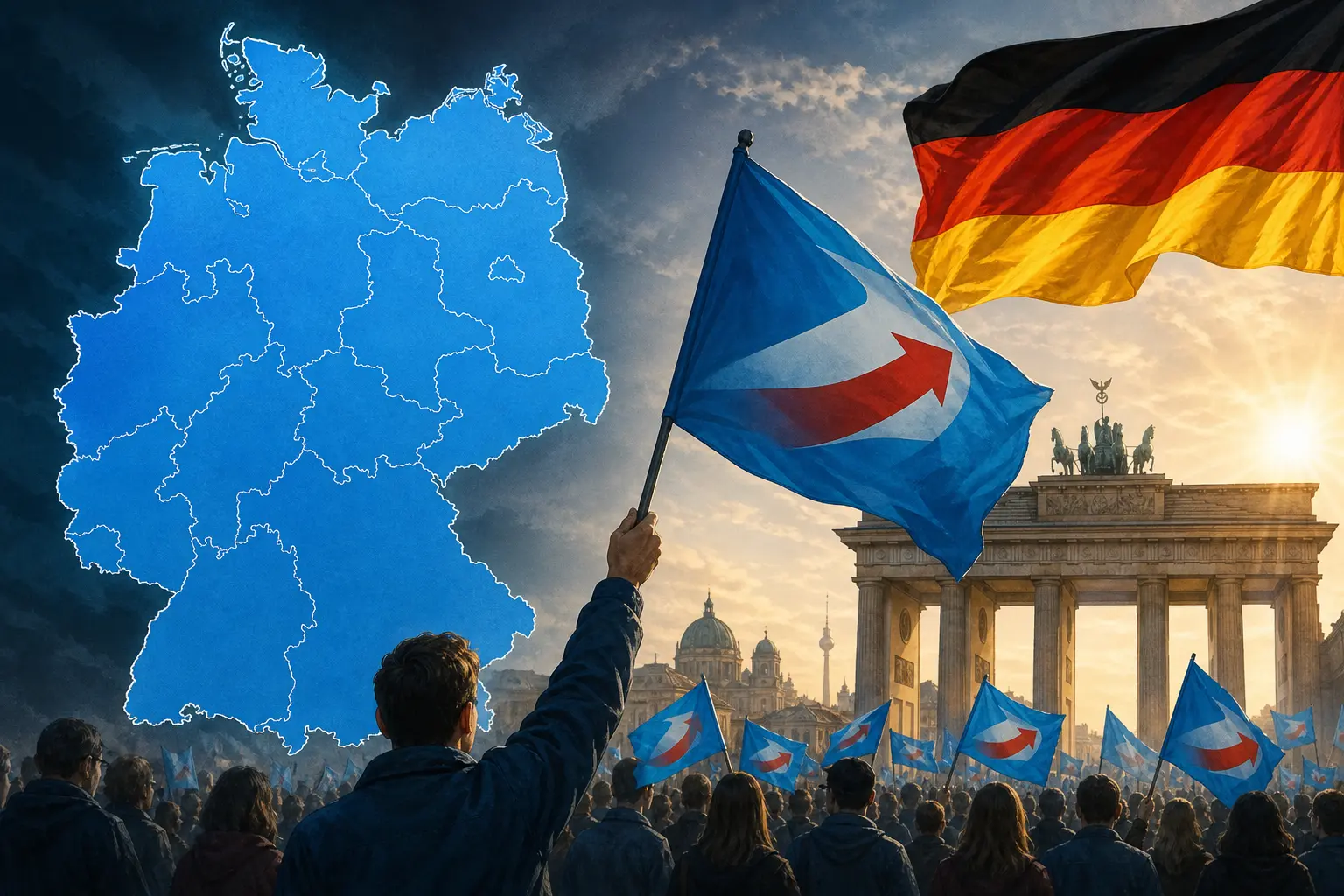
AI-generated editorial illustration. It is not a documentary photograph.
Photo: AI-generated editorial illustration / Arizona Asians
Germany’s far-right Alternative for Germany is pressing its advantage after a strong state election win in Saxony-Anhalt, where it fell short of an outright majority. The party says democratic norms require rivals to engage with it, underscoring a larger test for the country’s political firewall.
Germany’s far-right Alternative for Germany, or AfD, is using its victory in Saxony-Anhalt to push other parties to cooperate with it, even though it did not win enough seats to govern alone. The result has sharpened a broader political question in Germany: whether mainstream parties can continue to keep the AfD outside power as it grows stronger in regional elections.
The party’s deputy parliamentary leader, Beatrix von Storch, told the BBC the AfD was “very, very close” to taking power in the eastern state. She said democracy required other parties to work with the AfD after its election success. The party has also been reported as falling three seats short of a majority, leaving it unable to form a government on its own.
Saxony-Anhalt has become the latest flashpoint in Germany’s long-running debate over the so-called firewall, the informal refusal by mainstream parties to govern with the far right. That barrier has held at the state and federal levels for years, despite the AfD’s growing vote share in parts of eastern Germany.
According to reporting around the election, the AfD’s strong result in Saxony-Anhalt followed its 2024 victory in neighboring Thuringia, where it still lacked enough seats to take office. The party’s gains have helped it present itself as a government-in-waiting, even as other parties continue to reject formal cooperation.
Pressure grows on Germany’s political firewall
Von Storch also said the AfD had been speaking with individuals inside the Christian Democratic Union, or CDU, which is the largest party in the state’s outgoing coalition and part of Germany’s governing bloc. That tactic suggests the AfD is trying to build influence even without an outright majority, by appealing to discontent within rival parties.
The AfD’s challenge comes at a sensitive moment for German politics. Its rise has alarmed critics who say the party’s anti-immigration, nationalist and Russia-friendly positions put it well outside the mainstream, while supporters argue its electoral gains deserve a path to power. For now, the practical obstacle remains arithmetic: without a majority or a coalition partner, the party still cannot govern Saxony-Anhalt alone.
Topics
Source: Wahlergebnisse Sachsen-Anhalt
View original source ↗