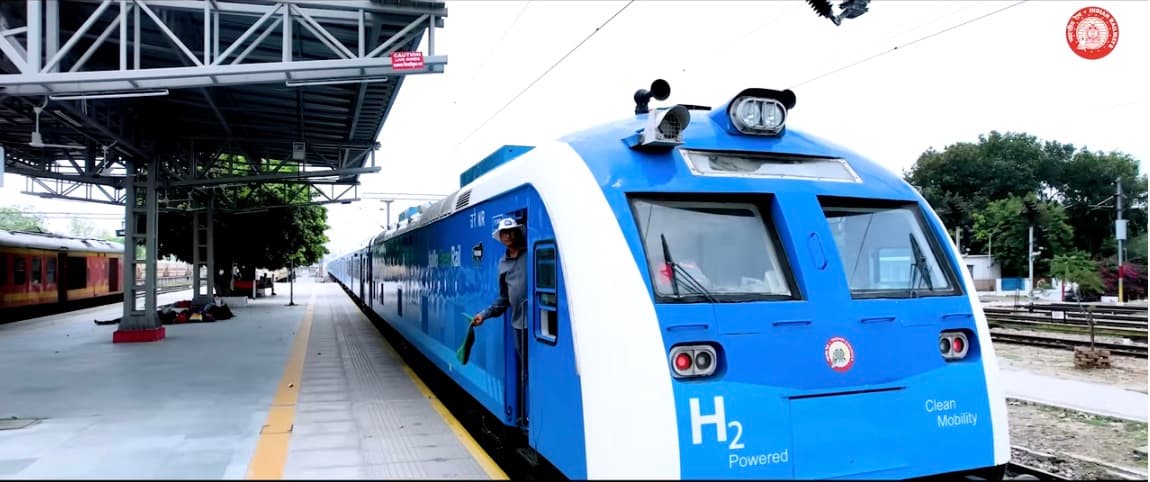
India Launches First Indigenous Hydrogen-Powered Train on Jind-Sonipat Route
India Launches First Indigenous Hydrogen-Powered Train on Jind-Sonipat Route
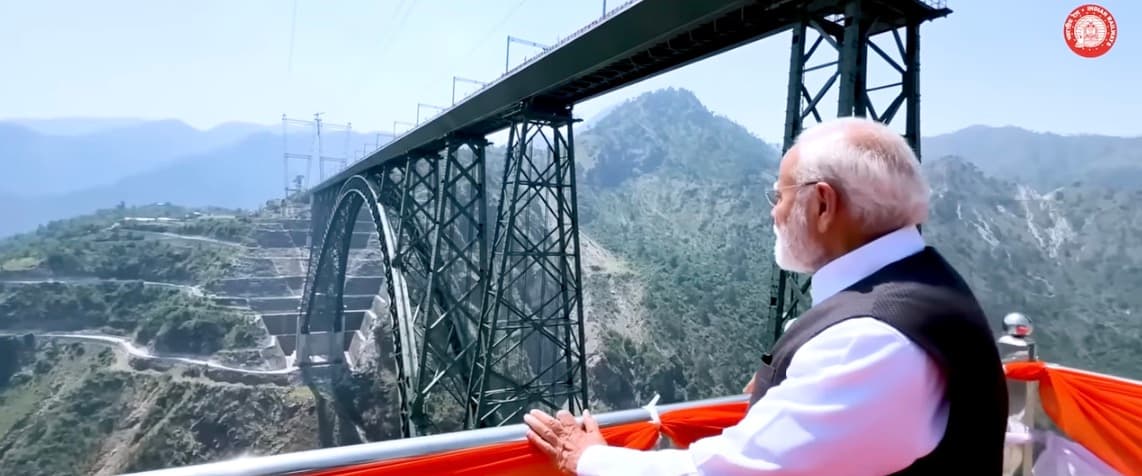
In a historic milestone for global green mobility, Prime Minister Narendra Modi officially flagged off India’s first hydrogen-powered train at the Jind railway station in Haryana. This landmark launch officially positions India within an elite circle of nations—including Germany, Japan, China, and the United States—actively pioneering or testing hydrogen-powered rail transport. The successful deployment represents a significant leap forward in Indian Railways' modernization efforts and its commitment to achieving net-zero carbon emissions. "Whenever Indian Railways is spoken of, the Bombay [now Mumbai] to Thane route is spoken of. Now, whenever hydrogen trains are spoken of, Jind will be remembered," Prime Minister Modi stated during the flag-off ceremony.
Route, Timings, and Operations
Operating under the Northern Railways zone, the pilot service will run along the Jind-Sonipat corridor in Haryana. Unlike conventional diesel trains, this zero-emission alternative is specifically aimed at replacing fossil-fuel dependencies on non-electrified or heritage routes.
Daily Schedule & Transit Breakdown
Train Number 74010 (Jind to Sonipat): Departs daily from Jind at 7:40 AM and arrives in Sonipat at 9:40 AM (Total travel time: 2 hours).
Train Number 74009 (Sonipat to Jind): Departs from Sonipat at 10:40 AM and returns to Jind at 1:00 PM (Total travel time: 2 hours and 20 minutes).
Corridor Stoppages
The train is scheduled to service 14 halts to ensure thorough connectivity for local commuting populations and regional trade hubs. Key intermediate stations along the corridor include:
Jind City, Pandu Pindara, and Lalit Khera
Bhambeva, Ishapur Kheri, and Butana
Khandrai, Gohana, Rabhra, and Lath
Mohana Haryana and Barwasni
Engineering Marvel: Key Technical Highlights
Designed, engineered, and integrated entirely within India, this train highlights the nation's expanding capacity for high-tech indigenous manufacturing.
World-Record Capacity: While global hydrogen train trials typically feature only 2 to 3 passenger cars, India’s configuration is a massive 10-coach passenger trainset (comprising 2 driving power cars and 8 trailer coaches), making it the longest of its type in the world. It is built to carry up to 2,600 passengers simultaneously.
Propulsion & Speed: Equipped with a formidable 3,200 horsepower propulsion system, the train has an engineering design speed of 110 km/h, though it will operate at a capped maximum speed of 75 km/h along the Jind-Sonipat trial section.
Dedicated Infrastructure: To sustain daily operations, an advanced, indigenous hydrogen storage and dedicated refueling facility has been custom-built on-site at the Jind station.
How the Zero-Emission Technology Works
The train operates using hydrogen fuel cell technology, avoiding combustion entirely.
Chemical Generation: Hydrogen gas stored in specialized cylinders mounted atop the train reacts chemically with oxygen drawn from the ambient air inside the fuel cells.
Onboard Power Plant: This chemical reaction directly generates electricity, which is routed into onboard lithium iron phosphate batteries and high-efficiency traction motors to drive the wheels.
Eco-Friendly Byproducts: Because the process relies on an electrochemical reaction rather than burning fuel, the only direct emissions produced from the tailpipe are pure water vapor and heat.
Looking to the Future
While Indian Railways has already successfully electrified over 99% of its broad-gauge network, the rollout of hydrogen fuel cell trainsets provides a clean energy blueprint for remote corridors, steep terrains, and historic heritage routes where overhead electrification is structurally unfeasible.
The long-term scaling of this technology will ultimately depend on local fuel supply chains, operational reliability, and ongoing infrastructure maintenance costs. However, this inaugural run serves as a concrete proof-of-concept—proving that India can successfully pair aggressive transportation expansion with progressive, lower-emission infrastructure solutions.
Video