India at 80: Celebrating Freedom, Achievement and a Bold Vision for the Future
India Celebrates 80th Independence Day
India celebrates its 80th Independence Day by honoring the sacrifices of its freedom movement, recognizing decades of democratic, economic and scientific progress, and looking toward an ambitious vision for a developed India by 2047.
NEW DELHI — August 15, 2026 — India is celebrating its 80th Independence Day, honoring the sacrifices that ended colonial rule while reflecting on nearly eight decades of democratic progress, economic transformation and national achievement.
The milestone is officially identified by India’s Ministry of Defence as the country’s 80th Independence Day. It marks 79 completed years of independence since August 15, 1947, with the 1947 celebration counted as the first Independence Day.
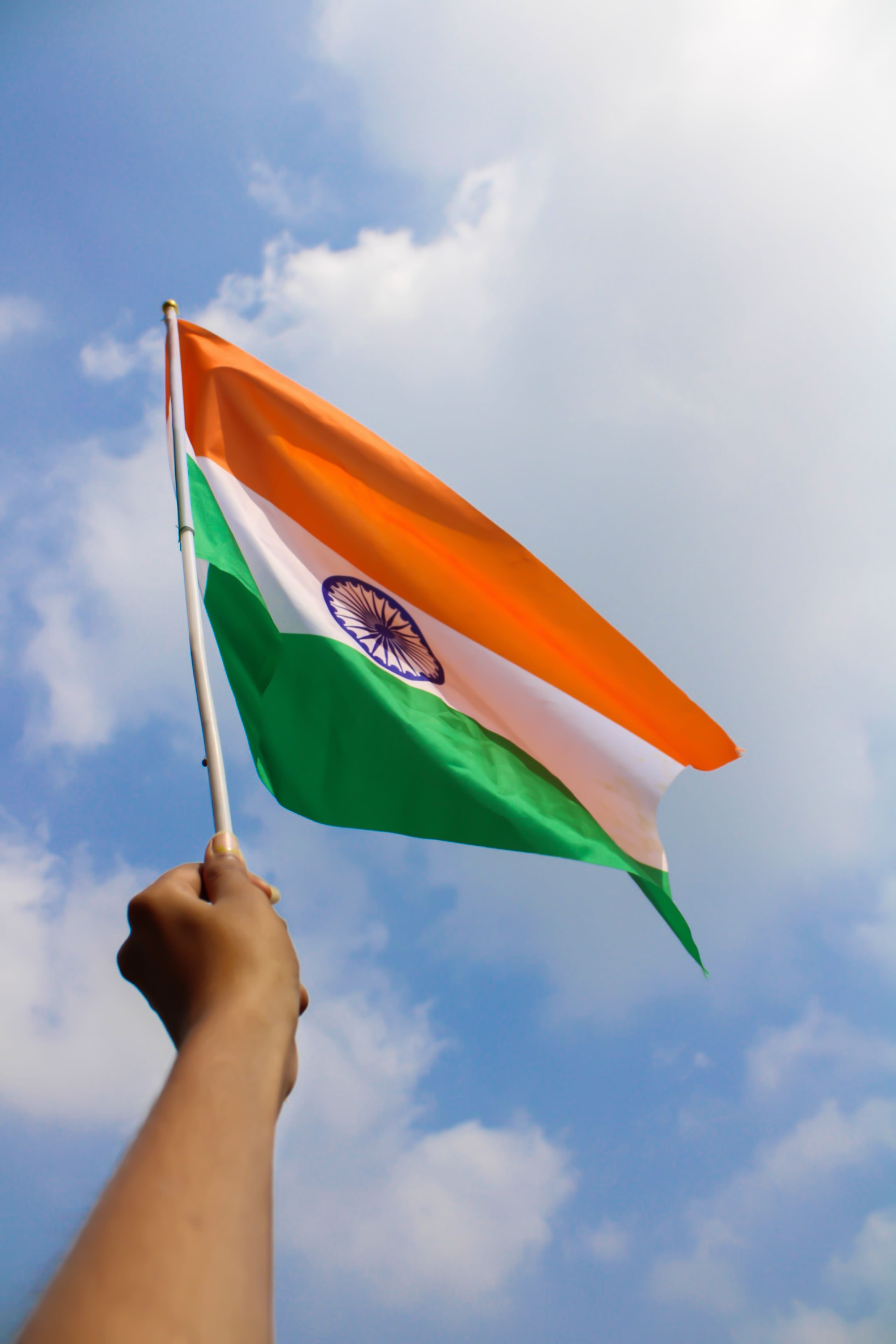
Across India, the national flag is being raised at government buildings, schools, homes and public spaces. The principal national ceremony traditionally takes place at Delhi’s historic Red Fort, where the prime minister hoists the Tiranga and addresses the nation.
For Indians living overseas—including the growing Indian American community in Arizona—the occasion is both a celebration of heritage and an opportunity to consider India’s place in an increasingly interconnected world.
Prime Minister Modi Outlines a Youth- and Technology-Focused Future: Addressing the nation from the Red Fort, Prime Minister Narendra Modi presented India’s next phase of development as one driven by self-reliance, education, technology and the energy of its youth. He announced plans for nationwide free online coaching for major competitive examinations, including the UPSC, JEE and NEET, along with expanded artificial-intelligence training opportunities. Modi also highlighted India’s growing capabilities in critical minerals and strategic technologies, reaffirming the goal of building a strong, innovative and developed India by 2047. He urged young Indians to use education, skills and entrepreneurship to contribute to the country’s future.
Remembering the Price of Freedom
India’s independence was achieved through generations of resistance, sacrifice and public participation. Mahatma Gandhi’s philosophy of nonviolence mobilized millions through movements such as Non-Cooperation, the Salt March and Quit India. Jawaharlal Nehru, Sardar Vallabhbhai Patel, Subhas Chandra Bose, Bhagat Singh, Sarojini Naidu, B.R. Ambedkar, Maulana Abul Kalam Azad, Rani Gaidinliu and countless other leaders contributed through different paths and philosophies. The freedom struggle also depended on millions of people whose names never entered history books—farmers, workers, students, writers, tribal leaders, women, soldiers and community organizers who endured imprisonment, hardship and, in many cases, death. Independence Day remembers all who believed that India could govern itself and build a nation rooted in dignity, equality and opportunity.
From a New Nation to a Global Power
When India became independent, it faced poverty, widespread illiteracy, food shortages, limited industrial capacity and the trauma of Partition.
Yet the country chose parliamentary democracy, constitutional government and universal adult voting rights. Hundreds of millions of people from different religions, languages, castes, cultures and regions became participants in one of history’s most ambitious democratic experiments. India adopted its Constitution in 1950, establishing a sovereign democratic republic founded on justice, liberty, equality and fraternity. Despite political disputes, economic difficulties and social tensions, its democratic institutions have continued to provide a framework for peaceful elections and public participation. That endurance remains one of independent India’s greatest accomplishments.
An Economy Transformed
India’s economy has evolved from one centered largely on agriculture into a diverse system spanning manufacturing, information technology, financial services, pharmaceuticals, telecommunications, space technology and digital commerce. The World Bank reported that India remained the fastest-growing major economy in the 2025–26 financial year, with growth reaching approximately 7.6%. While economic challenges remain, India’s expanding consumer market, skilled workforce and entrepreneurial culture continue to attract international investment. The World Bank’s April 2026 India Development Update outlines the country’s recent economic performance. Indian companies and professionals now play influential roles in technology, medicine, finance, manufacturing and research throughout the world.
The Indian diaspora has become an important bridge between India and other nations. In Arizona, Indian Americans contribute to healthcare, technology, education, business, hospitality, public service and community life while maintaining deep cultural and family connections with India.
Science and Space Inspire a Generation
India’s space program has become a powerful symbol of what the nation can achieve through education, scientific ambition and disciplined teamwork.
The Chandrayaan-3 mission made India the first country to land near the Moon’s south polar region. The Aditya-L1 observatory is providing scientists with continuous observations of the Sun, while the SpaDeX mission made India the fourth nation to demonstrate docking technology in space.
India is also advancing the Gaganyaan human-spaceflight program. In July 2026, the Indian Space Research Organisation successfully completed an important parachute test designed to help ensure the safe return of the future crew module. ISRO continues to publish updates on Gaganyaan and other missions.
These achievements are about more than rockets. They encourage young Indians to study science, engineering and mathematics while demonstrating that innovation can address challenges on Earth—from weather forecasting and disaster response to communications, agriculture and navigation.
A Digital Revolution With Global Influence
India has built one of the world’s most extensive digital public infrastructures.
Digital identity, mobile connectivity, online banking and the Unified Payments Interface have changed how people receive government benefits, send money and conduct business. A recent World Bank report noted that India was processing approximately 22 billion digital transactions each month by February 2026.
This digital transformation has helped street vendors, small businesses and families participate more easily in the formal economy. India’s technology model is also being studied by other countries seeking affordable and scalable digital systems.
Progress in Infrastructure and Clean Energy Highways, airports, metro systems, ports, railways and rural connections have expanded rapidly, bringing more communities into national and global markets. India is also building one of the world’s largest renewable-energy systems. According to the Ministry of New and Renewable Energy, the country had approximately 288.6 gigawatts of renewable capacity, including large hydropower, by June 2026. Solar power alone accounted for more than 162 gigawatts. Current capacity figures are available from the Ministry. The transition to cleaner energy presents an opportunity for India to support economic growth while addressing pollution, climate risks and energy security.
A Celebration of Unity in Diversity
India’s strength cannot be measured only through economic or technological statistics.
It is also found in the coexistence of hundreds of languages and dialects, numerous faiths and a cultural inheritance spanning thousands of years. Music, dance, cinema, literature, cuisine, festivals and traditional arts give every region its distinct identity while contributing to a shared national story. The Tiranga represents that unity. India’s present national flag was adopted by the Constituent Assembly on July 22, 1947. Its saffron, white and green bands and the navy-blue Ashoka Chakra have become enduring symbols of courage, peace, growth and continuous progress. The National Portal of India provides the history and meaning of the flag.
Through the Har Ghar Tiranga campaign, citizens are encouraged to bring the flag into their homes and treat Independence Day as a people’s celebration—not solely a government ceremony.
The Work of Freedom Continues
India’s accomplishments are remarkable, but independence is not a completed project. The nation continues to confront poverty, unequal access to quality education and healthcare, unemployment, environmental pressures, discrimination and disparities between urban and rural communities. Protecting democratic institutions, freedom of expression, religious harmony and constitutional equality remains essential. Acknowledging these challenges does not diminish India’s achievements. It recognizes that patriotism includes the responsibility to improve the country for every citizen. Political independence opened the door in 1947. Each generation must decide how widely the opportunities of freedom will be shared.
Looking Toward Viksit Bharat 2047
India’s next great national milestone will arrive in 2047, when the country marks 100 years of independence. The vision of Viksit Bharat, or Developed India, seeks to build a prosperous, technologically advanced, environmentally responsible and socially inclusive nation by that centenary. Achieving that future will require more than government programs. It will depend on educators who inspire, scientists who discover, entrepreneurs who create employment, farmers who sustain the nation, healthcare professionals who protect families, service members who defend the country and citizens who strengthen their communities. India’s greatest resource remains its people—especially its young population, whose ideas and ambitions will shape the coming decades. As the Tiranga rises on India’s 80th Independence Day, it carries the memory of those who sacrificed for freedom, the pride of a nation that has overcome extraordinary challenges and the promise of a future still being written.
Jai Hind.
Topics
Source: Government of India’s Rashtraparv portal, National Portal of India, Ministry of Culture, World Bank, Indian Space Research Organisation and Ministry of New and Renewable Energy.