
India and Sri Lanka Advance Cross-Border Power and Renewable Energy Cooperation
India and Sri Lanka have reviewed plans for a 1,000-megawatt cross-border electricity connection and the Sampur Solar Power Project as the countries expand cooperation on clean energy and regional power security.
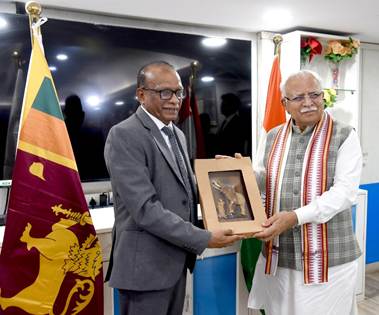
India and Sri Lanka have agreed to deepen cooperation in electricity trade, renewable energy and transmission infrastructure as the neighboring countries pursue greater energy security and a cleaner regional power system. India’s Minister of Power and Housing and Urban Affairs, Manohar Lal, met with Sri Lankan Energy Minister Anura Karunathilake in New Delhi to review major bilateral projects, including a proposed high-voltage power connection and the Sampur Solar Power Project.
Proposed Electricity Link Moves Forward
A central part of the discussions was the planned high-voltage direct current, or HVDC, connection between India and Sri Lanka.
The proposed project would connect New Madurai in India with Mannar in Sri Lanka through a 1,000-megawatt transmission system developed in two 500-megawatt phases, according to India’s National Electricity Plan.
Unlike the land-based electricity links India has with several neighboring countries, the Sri Lanka connection is expected to include an undersea cable.
India and Sri Lanka signed a memorandum of understanding in April 2025 to support implementation of the HVDC project and enable electricity imports and exports between the two countries. Press Information Bureau. If completed, the connection could allow the countries to exchange electricity based on changing demand and supply. It could also support greater use of renewable energy by allowing surplus electricity to move between the two power systems.
Sampur Solar Project Reviewed
The ministers also reviewed the Sampur Solar Power Project in Sri Lanka. The project is being developed through Trincomalee Power Company Limited, a joint venture between India’s NTPC and the Ceylon Electricity Board. India’s Ministry of Power previously described an initial 50-megawatt phase with potential expansion, while leaders from both countries participated in the groundbreaking for a broader 120-megawatt project in April 2025. The solar development is expected to increase Sri Lanka’s domestic renewable-energy capacity and reduce its exposure to imported fossil-fuel costs.
Broader Energy Partnership Discussed
The two governments discussed additional cooperation in:
Cross-border electricity trading;
Renewable-energy development;
Power-transmission infrastructure;
Technical training and capacity building; and
Regional energy security.
Indian officials also shared the country’s experience using tariff-based competitive bidding for transmission projects. Under this model, private companies compete to build, operate and maintain electricity infrastructure under a regulated public-private partnership framework. Both sides said stronger cooperation could support sustainable development and the transition toward cleaner energy across South Asia.
Manohar Lal reiterated India’s commitment to its long-standing energy partnership with Sri Lanka. Karunathilake thanked India for its support and expressed Sri Lanka’s intention to expand bilateral cooperation.
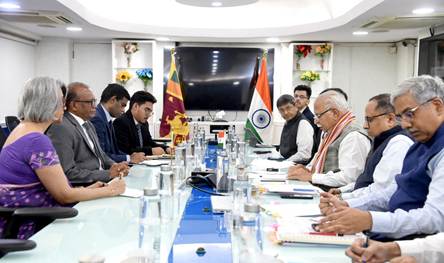
The meeting also included Indian Power Secretary Pankaj Agarwal, Sri Lankan High Commissioner to India Mahishini Colonne and other senior officials.
Regional Importance
An operating electricity link between India and Sri Lanka could become an important step toward a more interconnected South Asian power market.
Regional electricity trading can help participating countries share generating capacity, manage peak demand and make better use of renewable resources whose output changes with weather conditions.
Topics
Source: Press Information Bureau, Government of India
View original source ↗