
Haze worsens in Malaysia as 40 areas report unhealthy air quality, including seven in Johor
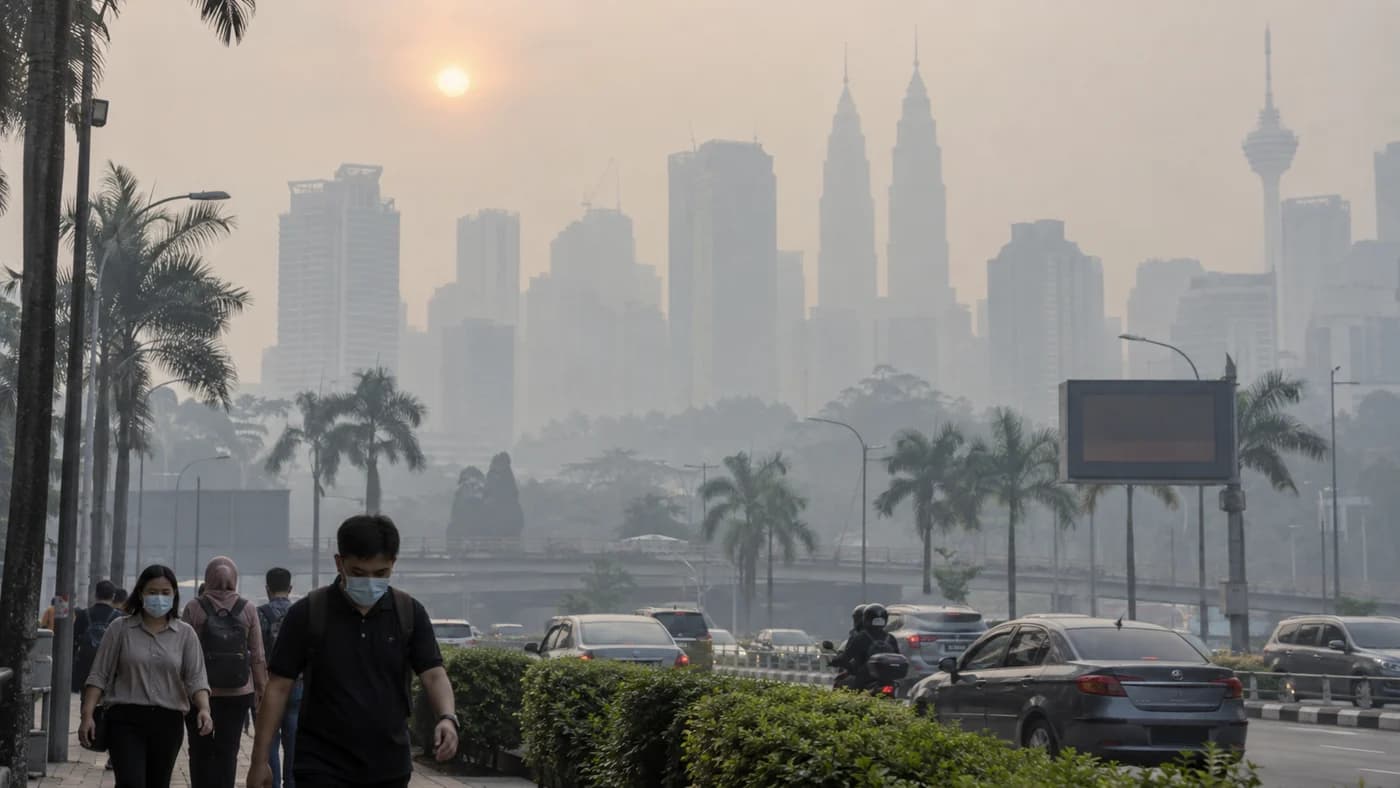
Haze worsened across Malaysia as multiple areas reported unhealthy air quality, including several in Johor.
Photo: AI-generated image by Arizona Asians.
Air quality in parts of Malaysia deteriorated further as 40 monitoring areas recorded unhealthy readings, with Johan Setia in Selangor logging the highest API level at 189. The readings underscore renewed concern over haze exposure in several states, especially in Johor.
Malaysia’s haze situation worsened as 40 monitoring areas recorded unhealthy air quality, including seven locations in Johor, according to the Department of Environment. The sharpest reading was logged in Johan Setia, Selangor, where the Air Pollutant Index reached 189, placing it well into the unhealthy range.
The readings affect people living and working in the affected areas, where authorities typically advise limiting prolonged outdoor activity when air quality slips into unhealthy levels. Under Malaysia’s air quality scale, an API above 100 is considered unhealthy, and higher readings can increase risks for sensitive groups such as children, older adults and people with respiratory conditions.
Malaysia’s Air Pollutant Index, or API, is used to report air quality in terms that reflect health effects rather than raw pollutant concentrations. The Department of Environment says the index is based on the highest sub-index among five monitored pollutants, and it is tied to the country’s haze action framework.
Johor among the hardest-hit states
Johor’s seven unhealthy areas put the southern state among the places most affected by the deteriorating conditions. The Straits Times report did not list all 40 areas by name, but the concentration of unhealthy readings in Johor points to a broad regional impact rather than an isolated hotspot.
Johan Setia’s API reading of 189 is close to the very high end of the unhealthy category and serves as a reminder of how quickly regional haze and local pollution sources can affect air quality. The Department of Environment maintains public air-quality information through its monitoring and open-data systems, which are used to track daily conditions nationwide.
The latest deterioration adds to ongoing concern in Malaysia during haze-prone periods, when smoke from fires and other airborne pollutants can spread across state borders. Officials have repeatedly emphasized that API readings are used to guide public-health responses and environmental enforcement.
Topics
Source: JAS Selangor / Department of Environment
View original source ↗