
Flock AI License Plate Cameras Expand Across U.S. as Cities Weigh Safety and Privacy
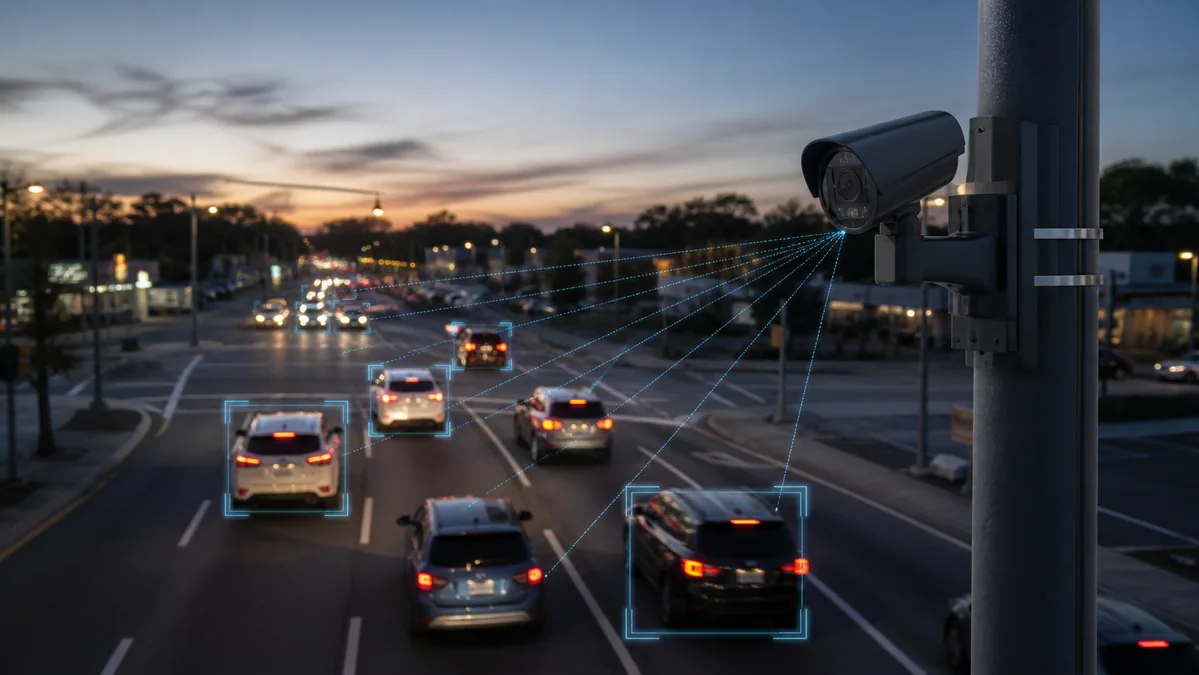
A symbolic image showing how AI-enabled traffic cameras are used in public-safety and vehicle-monitoring systems.
Photo: AI-generated image by Arizona Asians
Flock Safety’s AI-powered license plate reader cameras are now used by law enforcement agencies, businesses and communities across much of the United States, creating a growing debate over crime prevention, data sharing, privacy and local oversight.
Flock Safety’s AI-powered license plate reader cameras have become one of the most widely discussed public-safety technologies in the United States, as cities, police departments, businesses and neighborhoods use the system to identify vehicles connected to criminal investigations. The company’s license plate recognition cameras capture license plates and vehicle characteristics such as make, color and body type. Flock says the technology is used to help locate stolen vehicles, find missing people, investigate crimes and provide vehicle-related evidence to authorized public-safety users. According to Flock, its connected license plate reader network operates across 49 states and supported more than one million cases in 2025. The company says customers control how their data is shared and that searches are logged for accountability.
How the System Works
Flock cameras are typically placed along roads, parking areas, neighborhood entrances, commercial properties and other public-facing locations. When a vehicle passes a camera, the system records the license plate and visible vehicle details.
Law enforcement agencies can receive alerts when a vehicle matches a stolen-car list, wanted-vehicle notice or other approved investigative alert. Investigators may also search vehicle data when working on specific cases.
Flock says its automatic license plate recognition system does not use facial recognition, does not identify drivers or passengers, and does not collect demographic information such as race, religion or ethnicity. The company also says every search is tied to a specific user and can be reviewed by supervisors.
Supporters Cite Crime-Fighting Benefits
Police departments and public-safety supporters say the cameras can help officers act faster when searching for stolen vehicles, missing people, suspects in violent crimes or vehicles connected to property crimes.
Because vehicles often move across city and county boundaries, supporters argue that connected camera systems can help agencies share leads more quickly than traditional investigations. For growing communities, the technology is also seen as a way to expand investigative capacity without placing officers at every location.
Privacy Concerns Grow Nationwide
At the same time, Flock’s rapid expansion has created serious privacy concerns.
Civil liberties advocates argue that automatic license plate readers can create detailed records of where vehicles travel, especially when data is shared across jurisdictions. Critics say the technology can become a form of mass location tracking if local governments do not set strict rules for access, retention, audits and sharing.
The American Civil Liberties Union has criticized Flock’s nationwide growth and has called for stronger safeguards, greater transparency and limits on how long data is stored and who can access it. The debate has intensified as some cities reconsider contracts, restrict data sharing or end programs altogether.
Arizona Cities Face the Same Debate
Arizona is part of the national discussion. The City of Tempe recently announced that its Flock license plate reader system was turned off and that the city would not seek a replacement. Tempe said the cameras were no longer collecting license plate data and that Flock would remove its equipment. Tempe had also previously announced that its police department ended Flock data sharing to protect community data privacy. Other Valley communities have reviewed or debated similar issues, including how camera data is audited, whether it is shared outside the city, and what protections exist against misuse.
The Key Question: Safety or Surveillance?
The national debate is not simply about whether AI cameras can help solve crimes. It is about how much vehicle-location data communities are comfortable collecting, how long that data should be stored, and who should be allowed to search it.
For local governments, the most important questions include:
Where are the cameras placed?
Who can access the data?
How long is data stored?
Is data shared with outside agencies?
Are searches audited regularly?
Are residents informed before deployment?
What happens if an employee misuses the system?
Supporters believe Flock cameras can be a useful tool when used for specific investigations with strong controls. Critics argue that without clear limits, the same technology can become a broad surveillance network. Residents in communities using or considering Flock cameras should look for public policies explaining camera locations, data retention, sharing rules, audit procedures and complaint processes. Local transparency portals, city council discussions and police department policies can help residents understand whether the technology is being used narrowly for public safety or broadly for ongoing vehicle tracking.
As AI tools become more common in public safety, Flock’s expansion shows the larger challenge facing American cities: how to use technology to improve security while protecting privacy, civil liberties and public trust.
Additional References:
Flock Safety Trust Center: https://www.flocksafety.com/trust
City of Tempe Community Services News: https://www.tempe.gov/government/community-services/community-services-news/-selcat-44
ACLU: https://www.aclu.org/news/privacy-technology/tracking-alpr-cameras/despite-new-updates-flocks-creepy-cameras-remain-major-civil-liberties-threat
Topics
Source: Flock Safety Trust Center:
View original source ↗Editorial Note: Sources: Flock Safety, City of Tempe and ACLU public information.