
Dolores Huerta, labor leader and civil rights icon, dies at 96
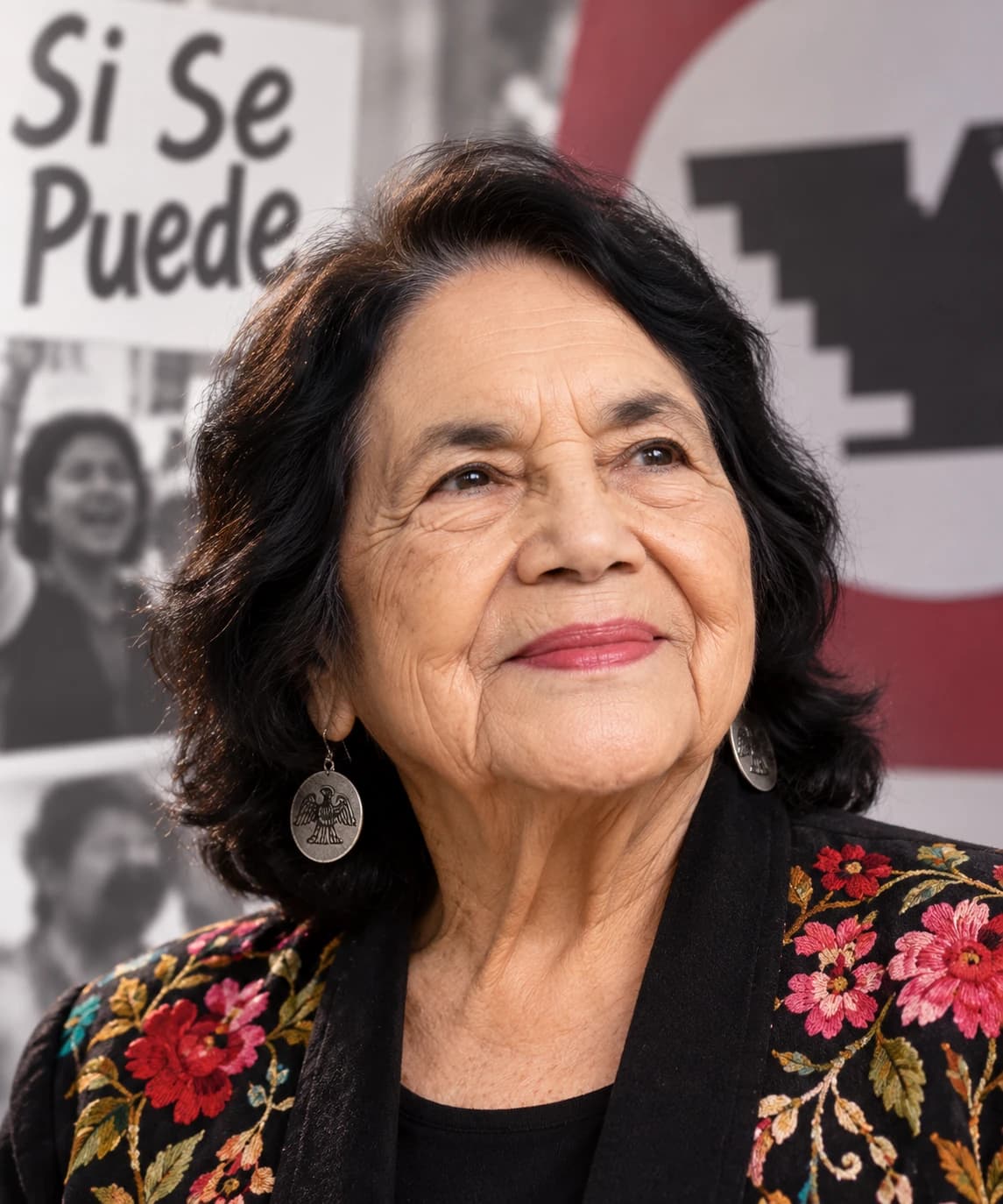
Dolores Huerta, labor leader and civil rights icon, dies at 96
Photo: Arizona Asians / AI-generated image
Dolores Huerta, the co-founder of the United Farm Workers and one of the most recognized voices in the farmworker movement, has died at age 96. Her death closes a decades-long career that helped shape labor, immigrant and civil rights organizing across the United States.
Dolores Huerta, the labor organizer whose work helped transform the fight for farmworkers’ rights and whose rallying cry “Sí, se puede!” became a global slogan for grassroots activism, died Wednesday at age 96. She died of cancer at her home in Bakersfield, California, surrounded by family, according to a family spokesperson.
Huerta’s death is being felt far beyond the fields where she first built her reputation. For generations of activists, especially Latinas, farmworkers and immigrant communities, she represented a model of sustained organizing, political courage and public leadership that extended from labor struggles into voting rights, women’s equality and civil rights.
Born Dolores Clara Fernandez in 1930 in Dawson, New Mexico, Huerta was raised in California after her parents divorced. Her father was a miner and union activist, and her mother encouraged independence and civic engagement. Huerta later taught in the San Joaquin Valley, where she said she was moved to organize after seeing students arrive hungry and without basic necessities.
A movement built in the fields
Huerta’s early civil rights work led her to César Chavez, and in 1962 they co-founded the National Farm Workers Association, which later became the United Farm Workers. Together, they helped organize farm laborers in California and beyond, including during the Delano Grape Strike, a campaign that helped build national pressure for better wages, working conditions and collective bargaining rights for farmworkers.
Over the years, Huerta became known not only as an organizer but also as a negotiator, strategist and public advocate. She helped lead boycotts of grapes and lettuce, campaigned for political representation for Mexican Americans, and worked on efforts tied to disability insurance, financial aid for unemployed farmworkers and protections against toxic pesticides. She was also jailed 22 times during labor demonstrations, according to accounts of her activism.
Her advocacy extended well beyond labor. Huerta campaigned for women’s rights, encouraged Latinas to run for office and worked on voting rights efforts, including registering Mexican Americans during Robert F. Kennedy’s 1968 presidential campaign. She later supported Democratic presidential campaigns and remained active into her 90s, continuing to speak on race, poverty, LGBTQ+ rights and gender equality.
Huerta received the Presidential Medal of Freedom in 2012. In recent years, she also drew renewed attention for revelations about abuse she said she endured from Chavez decades earlier, a disclosure that sparked reflection across the labor movement and among longtime admirers of the United Farm Workers co-founder.
Her death prompted immediate tributes from political leaders, labor allies and civil rights advocates who credited her with reshaping the national conversation around dignity at work and civic participation. For many, Huerta’s legacy will be remembered not just for the campaigns she led, but for the generations she helped convince to organize, vote and speak out.
Topics
Source: Associated Press
View original source ↗