
China's economy accelerates as AI-linked exports offset weak domestic demand
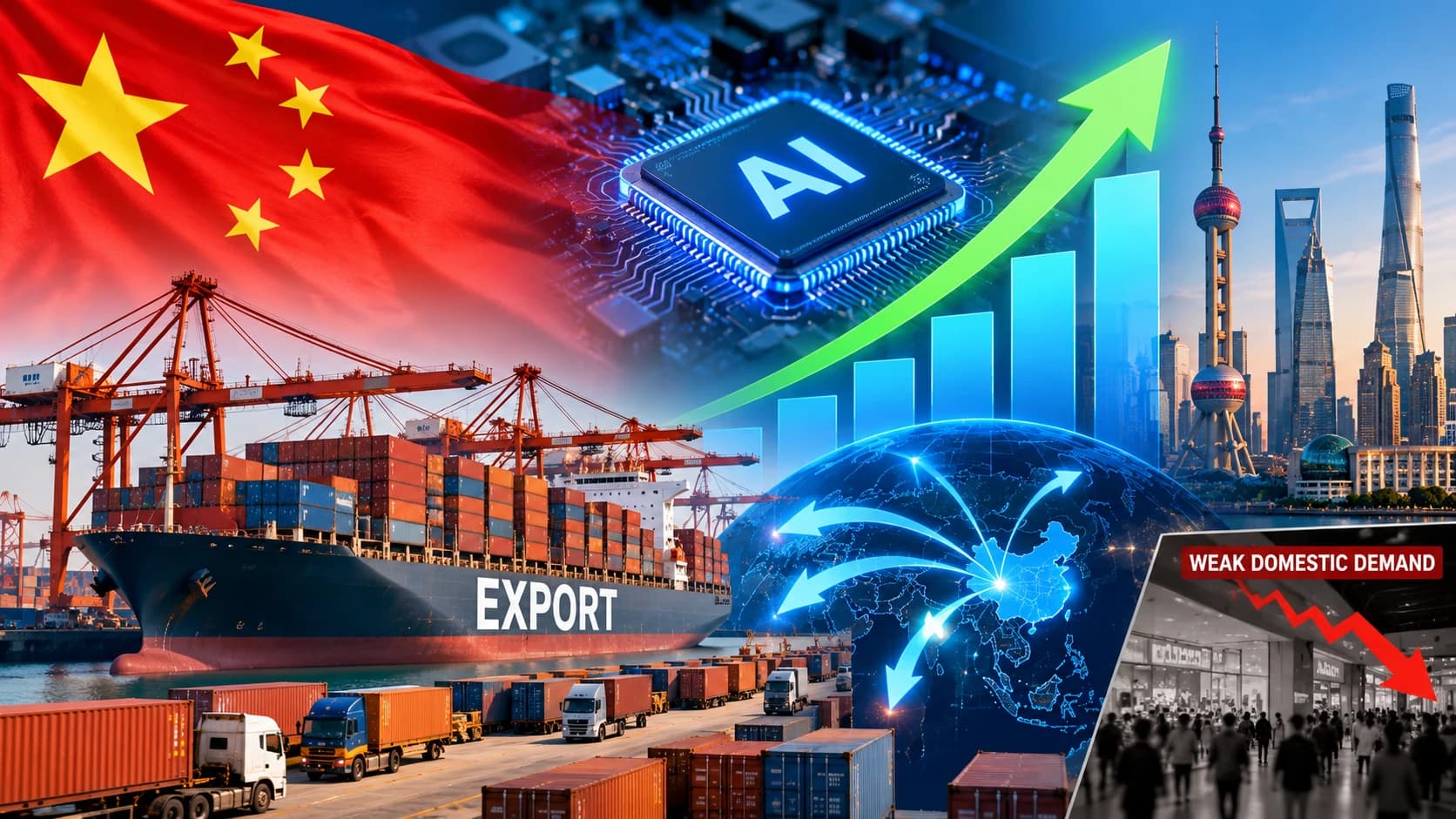
China’s economic acceleration as AI-linked exports support growth despite continued weakness in domestic demand.
Photo: Arizona Asians / AI-generated image
China’s economy picked up speed in the third quarter of 2026, helped by stronger exports tied to artificial intelligence demand even as household spending and other parts of domestic demand remained soft. Official data showed the country’s growth rate improving and keeping Beijing within reach of its annual target.
China’s economy accelerated in the July-to-September quarter of 2026, with official data showing growth of 4.5% year on year as export demand tied to the global AI boom helped offset weakness at home. The stronger reading matters because it suggests trade and industrial output continue to carry much of the burden of growth while domestic demand remains uneven.
The latest figures point to a widening split inside the world’s second-largest economy. Manufacturing and exports have held up better than consumer spending and investment, leaving policymakers with the challenge of sustaining momentum without relying too heavily on external demand. The third-quarter pace also kept China close to its full-year target range of about 4.5% to 5%.
Earlier in the year, China’s growth had been supported by a combination of government stimulus and a surge in overseas shipments. Official statistics released this month show the economy expanded 4.6% in the first three quarters of 2026, while the IMF’s October data mapper lists China’s 2026 growth forecast at 4.5%. That forecast reflects expectations that the country will continue to grow, but not at the faster rates seen before the pandemic.
Exports remain the main engine
China’s customs authorities and state media have described the export rebound as broad-based, with new drivers including higher-value industrial goods and technology-related shipments. A government-backed briefing earlier this month said foreign trade posted faster and more balanced growth in the first three quarters, and cited strong global demand for products connected to computing power and AI infrastructure.
The export surge has come alongside signs of lingering weakness in parts of the home economy. Consumer demand has not recovered evenly, and the property sector remains a drag on sentiment and investment. That mix has led economists to watch closely whether China can maintain growth through industrial upgrading and external sales alone, or whether stronger domestic demand will need to do more of the work in the months ahead.
The new GDP figures offer Beijing some breathing room, but they also underscore the economy’s dependence on sectors linked to the global technology cycle. With the year nearing its close, the next test will be whether the export-led recovery can continue long enough to keep China on track for its annual growth goal.
Topics
Source: National Bureau of Statistics of China / gov.cn
View original source ↗