
Arizona: What Makes the Grand Canyon State So Unique and Special? A Land of Natural Wonders, Rich Cultures, and Endless Opportunities
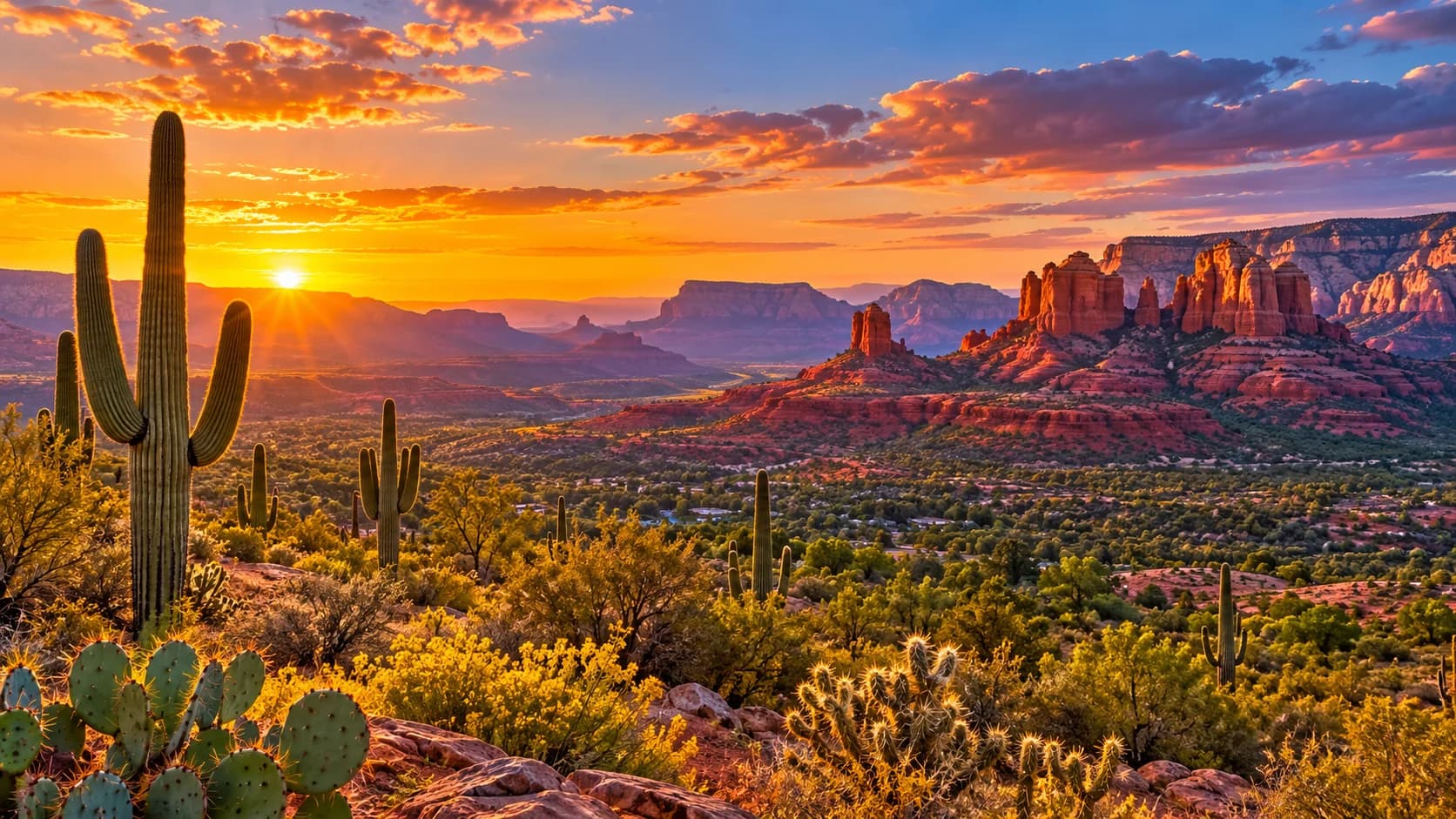
Unique Arizona Landscape
Photo: AI Generated Image
From the breathtaking Grand Canyon and iconic desert sunsets to world-class innovation, thriving communities, and a remarkable quality of life, Arizona offers a unique combination of natural beauty, cultural heritage, and opportunity.
Arizona is more than a destination on a map. It is a place where natural wonders meet modern innovation, ancient traditions coexist with emerging technologies, and people from diverse backgrounds come together to create vibrant communities.
Known as the Grand Canyon State, Arizona is celebrated for its spectacular landscapes, abundant sunshine, rich Indigenous heritage, and distinctive Southwestern character. Yet its appeal extends far beyond tourism. Arizona has emerged as an important center for advanced manufacturing, technology, education, entrepreneurship, and cultural exchange.
Whether someone is visiting for the first time, relocating for a career, raising a family, or enjoying retirement, Arizona offers something special.
What makes Arizona truly remarkable is its extraordinary diversity—not only in its people and cultures but also in its geography, climate, economy, and lifestyle.
A State of Extraordinary Natural Beauty
Few places in America offer the geographical contrasts found in Arizona.
The Grand Canyon, one of the world's most recognizable natural wonders, stretches approximately 277 miles through northern Arizona. Its immense cliffs, colorful geological formations, and dramatic views attract millions of visitors and provide an unforgettable reminder of the Earth's geological history.
But Arizona's natural treasures extend well beyond the Grand Canyon.
Sedona is famous for its towering red-rock formations, scenic hiking trails, and peaceful atmosphere. Antelope Canyon near Page reveals spectacular sandstone passages shaped by centuries of erosion. Monument Valley, located within the Navajo Nation, features monumental sandstone formations that have become symbols of the American West.
Southern Arizona offers another extraordinary landscape: the Sonoran Desert, where giant saguaro cacti rise against rugged mountain ranges.
These iconic plants can live for more than 150 years and reach heights exceeding 40 feet.
Perhaps most surprising to first-time visitors is northern Arizona's dramatically different environment. Flagstaff, the White Mountains, and surrounding high-elevation regions feature pine forests, mountain lakes, cooler summers, and winter snowfall.
Arizona's landscapes allow residents to experience deserts, forests, mountains, rivers, and snow-covered scenery without leaving the state.
The Arizona Office of Tourism highlights this geographical diversity as one of the state's defining attractions. Visit Arizona
Sunshine and a Lifestyle Built Around the Outdoors
Arizona's sunshine is legendary.
The Phoenix metropolitan area enjoys abundant sunny days throughout the year, making outdoor recreation an important part of everyday life.
During the cooler months, residents can enjoy hiking, cycling, golf, outdoor dining, neighborhood walks, and community festivals.
Popular destinations such as Camelback Mountain, Papago Park, South Mountain Park, and the McDowell Sonoran Preserve provide convenient access to nature, even within major metropolitan areas.
Arizona also offers something unusual: the opportunity to experience different seasons by traveling relatively short distances.
While Phoenix and Tucson enjoy comfortable winter afternoons, higher elevations near Flagstaff may experience snow.
During the intense summer heat in the desert valleys, mountain destinations such as Prescott, Payson, and the White Mountains offer cooler alternatives.
The summer monsoon season adds another dimension, bringing dramatic thunderstorms, spectacular cloud formations, and occasional bursts of desert greenery.
Although Arizona's extreme summer temperatures require precautions, its varied climate and natural surroundings encourage an active lifestyle throughout much of the year.
A Cultural Heritage Thousands of Years in the Making
Arizona's identity is inseparable from its Indigenous heritage.
The region has been home to Indigenous peoples for thousands of years, long before Arizona became a U.S. state in 1912.
Today, Arizona is home to 22 federally recognized Tribal Nations, including the Navajo Nation, Hopi Tribe, Tohono O'odham Nation, Gila River Indian Community, and Salt River Pima-Maricopa Indian Community.
These sovereign nations maintain their own governments and preserve distinct languages, traditions, artistic expressions, and cultural practices.
Tribal lands cover approximately one-quarter of Arizona, making Indigenous heritage an essential part of the state's present as well as its history. Visit Arizona
Arizona's Hispanic and Mexican heritage is equally visible in its architecture, cuisine, music, festivals, and community traditions.
Historic missions, traditional markets, colorful celebrations, and generations-old family businesses contribute to Arizona's distinctive Southwestern identity.
Together, these cultural influences create a state with a deep sense of history and a strong connection to its roots.
A Growing Home for Asian and International Communities
Arizona's cultural landscape continues to evolve as people from around the world make the state their home.
The Phoenix metropolitan area, particularly Chandler, Gilbert, Mesa, Tempe, and Scottsdale, has developed growing communities with connections to India, China, Korea, Japan, the Philippines, Vietnam, Pakistan, Nepal, and other Asian countries.
These communities contribute to Arizona through entrepreneurship, healthcare, engineering, education, research, hospitality, and numerous other professions.
Cultural and religious organizations help families maintain connections with their heritage while participating in American civic and community life.
Indian temples, Buddhist centers, Asian cultural associations, language schools, grocery stores, restaurants, and community organizations have become important parts of Arizona's social environment.
Festivals such as Diwali, Lunar New Year, Holi, and other cultural celebrations bring families together and introduce traditional customs, music, dance, and cuisine to wider audiences.
For newcomers, these networks provide meaningful connections, helping transform an unfamiliar location into a welcoming community.
For long-term residents, increasing cultural diversity enriches Arizona's identity and creates opportunities for friendship, collaboration, and shared experiences.
Arizona's strength lies not only in its ability to attract people from different backgrounds but also in the opportunities it provides for those communities to contribute to the state's future.
From Copper Mining to the Future of Artificial Intelligence
Arizona's economic transformation is one of its most compelling stories.
Historically, the state's economy was associated with the famous Five Cs: copper, cattle, cotton, citrus, and climate.
Today, Arizona is building on that foundation through advanced manufacturing, semiconductors, aerospace, defense, logistics, healthcare, and emerging technologies.
The Greater Phoenix region has become an increasingly important center for semiconductor manufacturing.
In July 2026, the Arizona Commerce Authority announced that TSMC's additional planned investment would bring its total announced Arizona investment to approximately $265 billion, spanning semiconductor fabrication plants, advanced packaging facilities, and a research and development center. These figures represent announced commitments, not necessarily completed expenditures. Arizona Commerce Authority
This development is particularly significant because semiconductors power technologies ranging from smartphones and medical devices to electric vehicles, data centers, and artificial intelligence systems.
Arizona's growing semiconductor ecosystem creates opportunities for engineering, manufacturing, research, construction, supply chain management, and specialized professional services.
The state's universities also play an important role.
Arizona State University, the University of Arizona, and Northern Arizona University support education, research, entrepreneurship, and workforce development.
For technology professionals, business owners, researchers, and young graduates, Arizona increasingly offers opportunities in industries that will help shape the next generation of the global economy.
A Distinctive Place to Live and Raise a Family
Arizona offers a broad range of lifestyles, from major metropolitan neighborhoods to quiet mountain communities.
The Phoenix metropolitan area includes cities with distinct characteristics.
Scottsdale is known for its resorts, restaurants, arts scene, and recreational amenities. Chandler has developed a strong concentration of technology and manufacturing employers. Gilbert attracts families seeking suburban neighborhoods and community amenities, while Tempe benefits from the presence of Arizona State University and a lively student environment.
Mesa, Glendale, Peoria, and surrounding cities provide additional residential, educational, and employment options.
Outside metropolitan Phoenix, Tucson offers a distinctive blend of university life, desert landscapes, cultural heritage, and culinary traditions.
Prescott, Flagstaff, and other smaller communities provide alternatives for residents who prefer cooler climates or a less urban lifestyle.
Arizona is not without challenges. Housing costs vary considerably, and residents must consider summer heat, transportation, healthcare access, and other practical factors when choosing where to live.
Nevertheless, the state's combination of sunshine, natural scenery, employment opportunities, educational institutions, and diverse communities continues to make it appealing to many families and professionals.
Extraordinary Sunsets and Some of America's Most Beautiful Night Skies
One of Arizona's most memorable experiences costs nothing: watching the sunset.
As evening approaches, the desert sky often transforms into shades of orange, pink, purple, and gold.
Mountains become dark silhouettes, and towering saguaros stand against the changing colors.
Whether viewed from a neighborhood park, a hiking trail, or a desert overlook, an Arizona sunset can turn an ordinary evening into something extraordinary.
The state's natural beauty continues after dark.
Arizona is internationally recognized for its astronomy heritage and dark-sky preservation efforts.
Flagstaff was designated the world's first International Dark Sky City in 2001, reflecting its commitment to reducing light pollution and protecting the night sky.
Lowell Observatory, established in Flagstaff in 1894, has played an important role in astronomical research and public education.
In many rural parts of Arizona, visitors can experience remarkably clear views of the Milky Way and countless stars.
These experiences remind residents and visitors that some of Arizona's greatest attractions are found simply by looking at the landscape and sky.
Sports, Entertainment, and a Vibrant Social Life
Arizona has developed a lively sports and entertainment culture.
The state is home to professional teams including the Arizona Cardinals, Phoenix Suns, and Arizona Diamondbacks.
Major League Baseball's Cactus League brings spring training games to stadiums across the Phoenix metropolitan area, attracting fans and visitors from throughout North America.
Golf is another major attraction, with Scottsdale and surrounding communities hosting internationally recognized tournaments and offering numerous courses.
Beyond sports, Arizona supports a vibrant arts and entertainment scene.
The Musical Instrument Museum in Phoenix, the Heard Museum, Desert Botanical Garden, performing arts venues, concert halls, and community theaters provide a wide range of cultural experiences.
Food festivals, international celebrations, holiday events, and local markets contribute to an active social calendar.
Arizona's multicultural communities add further variety through regional music concerts, dance performances, traditional festivals, and international film screenings.
For families and individuals seeking recreational activities, Arizona offers far more than its desert reputation might suggest.
A Culinary Destination with Global Flavors
Arizona's food culture reflects its history, geography, and increasingly international population.
Traditional Southwestern dishes draw from Indigenous, Mexican, and regional agricultural traditions.
Tucson has received international recognition as a UNESCO City of Gastronomy, celebrating the area's distinctive food heritage and longstanding agricultural practices.
Across Greater Phoenix, restaurants represent cuisines from around the world.
Indian, Chinese, Japanese, Korean, Thai, Vietnamese, Mediterranean, Mexican, and many other culinary traditions are readily available.
Growing interest in vegetarian, vegan, and plant-based dining also provides additional choices for residents with different dietary preferences.
Farmers markets, specialty food stores, family-owned restaurants, and innovative chefs contribute to a dining scene that reflects Arizona's multicultural character.
Food has become another way for communities to connect, exchange traditions, and celebrate their heritage.
Preserving What Makes Arizona Special
Arizona's rapid growth creates opportunities, but it also brings responsibilities.
Water availability remains one of the state's most important long-term concerns.
The Colorado River, groundwater resources, and other water supplies support residents, agriculture, and businesses across Arizona.
Continued population growth and industrial expansion require careful planning, conservation, and investment in sustainable infrastructure.
Extreme heat, wildfire risks, urban development, and the preservation of natural habitats are also significant considerations.
Protecting Arizona's future requires cooperation among communities, businesses, Tribal Nations, educational institutions, and government agencies.
Innovation in water management, renewable energy, transportation, and sustainable construction could help address these challenges while creating new economic opportunities.
Arizona's success should ultimately be measured not only by economic growth but also by its ability to protect natural resources, preserve cultural heritage, and maintain a good quality of life for future generations.
What Truly Makes Arizona Great?
Every state has something special, but Arizona brings together an unusually compelling combination of qualities.
Its natural landscapes are among the most recognizable in the world. Its Indigenous and Hispanic heritage gives it a cultural depth that extends across centuries. Its growing international communities bring new traditions, businesses, and perspectives.
Its economy is evolving from traditional industries toward advanced technologies, while its universities and research institutions are helping prepare the next generation of professionals.
For outdoor enthusiasts, Arizona offers nearly endless opportunities to explore. For families, it provides a variety of communities and lifestyles. For entrepreneurs and professionals, it offers possibilities in both established and emerging industries.
But perhaps Arizona's greatest quality is more personal.
It is the feeling of watching the sun rise over the desert mountains, sharing a meal with friends from different cultures, exploring an unfamiliar trail, or discovering that a place known for its rugged landscape can also offer a strong sense of community.
Arizona is a place of contrasts, possibilities, and remarkable beauty.
It respects a rich past while building an ambitious future.
The Grand Canyon may be Arizona's most famous landmark, but the state's true greatness comes from everything beyond it: its people, cultures, landscapes, opportunities, and the communities that make it home.
For residents and visitors alike, Arizona offers something worth discovering, appreciating, and preserving.
Editorial sources: