
Arizona Faces Deeper Colorado River Water Reductions Under New Federal Plan
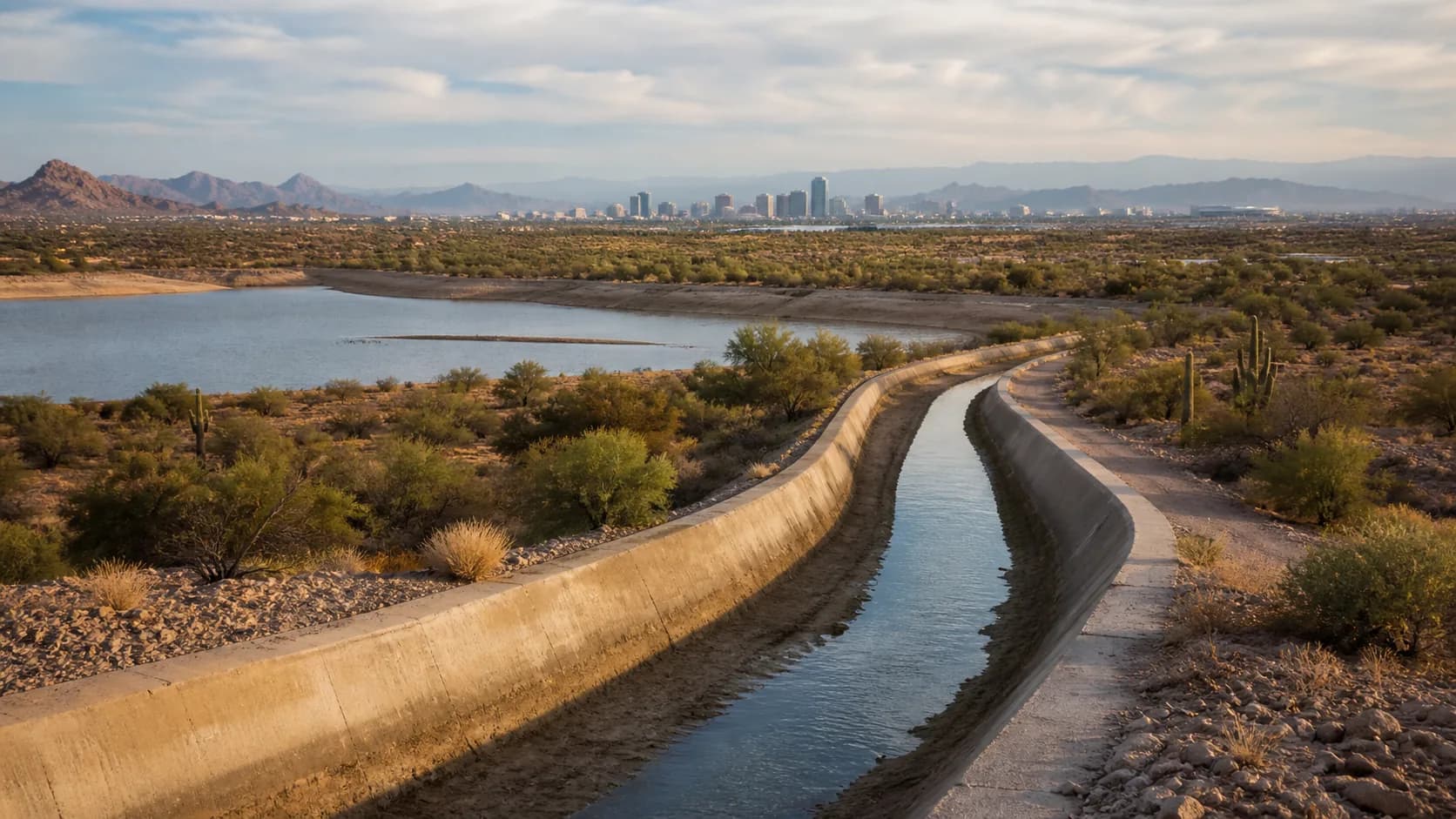
Arizona faces deeper Colorado River water reductions as drought and low reservoir levels continue to pressure the Southwest.
Photo: AI-generated image by Arizona Asians
Arizona could see Colorado River deliveries reduced by 760,000 acre-feet annually in 2027 and 2028 under new federal operating guidelines aimed at protecting Lake Mead, Lake Powell and critical water infrastructure.
Phoenix, Arizona - Arizona is preparing for deeper Colorado River water reductions after the U.S. Department of the Interior finalized new operating guidelines for 2027 and 2028. The federal plan calls for the Lower Basin states - Arizona, California and Nevada - to reduce Colorado River water deliveries by 1.25 million acre-feet per year in both 2027 and 2028. If the states implement their proposed sharing agreement, Arizona would take the largest reduction at 760,000 acre-feet annually. California’s share would be 440,000 acre-feet, while Nevada’s would be 50,000 acre-feet. The reductions are designed to protect the Colorado River system as Lake Powell and Lake Mead remain at historically low levels. The Interior Department said the combined storage in the two reservoirs has not been this low since before Lake Powell began filling in the 1960s.
The Colorado River is one of Arizona’s most important water sources. It supports cities, farms, tribes, businesses and millions of residents across the state. Much of central Arizona receives Colorado River water through the Central Arizona Project.
Arizona is already operating under shortage conditions in 2026, with a reduction of about 512,000 acre-feet. The new 2027-2028 plan would represent a larger cut and would require state leaders, water agencies and users to determine how the reductions are shared.
For most households in Phoenix and other urban areas, the plan does not mean taps will suddenly run dry. Cities have been planning for shortage conditions through groundwater reserves, stored water, conservation programs, reuse projects and diversified water portfolios.
However, the pressure on Arizona’s water future is real. Agriculture, underground water storage programs and lower-priority users have historically absorbed much of the impact from Colorado River shortages. Additional reductions may increase pressure on farming communities, tribal water firming obligations and long-term growth planning.
The federal plan also includes voluntary conservation tools and storage options. Lower Basin states are expected to conserve and store at least 700,000 acre-feet of additional water over the two-year period to help stabilize the system.
For Arizona residents, the message is clear: water conservation is no longer a temporary drought response. It is becoming a permanent part of life in the Southwest.
Practical steps such as reducing outdoor water use, repairing leaks, using desert-adapted landscaping and supporting efficient water policies can help communities adjust as the Colorado River faces long-term stress from drought, overuse and hotter conditions.
State and federal officials are expected to continue negotiations on longer-term Colorado River rules beyond 2028.
Topics
Source: U.S. Department of the Interior
View original source ↗Editorial Note: U.S. Department of the Interior.